 By Raji Shah · Updated 2026-10-19
For most runners who train for races, a Garmin Forerunner is the better running watch: it lasts days instead of hours, has physical buttons, and includes Garmin's training tools at no extra cost, even on the $249.99 Forerunner 70. The Apple Watch is the better smartwatch and a capable running watch for iPhone owners, and the $799 Ultra 4 is the one Apple model with dual-frequency GPS and the battery for long trail races and ultras. Here is how the current models compare as of October 2026, and which to buy.
Quick answer: choose a Garmin Forerunner if you run four or more days a week, train for races, want buttons that work in rain and gloves, or use an Android phone. Choose an Apple Watch if you want one watch for your whole day, you use an iPhone, and running is one of several things you do. If you want Apple, the Series 12 suits most runners and covers most marathons, though it needs charging every day; buy the Ultra 4 for trails and ultras. Prices are US list prices as of October 2026.
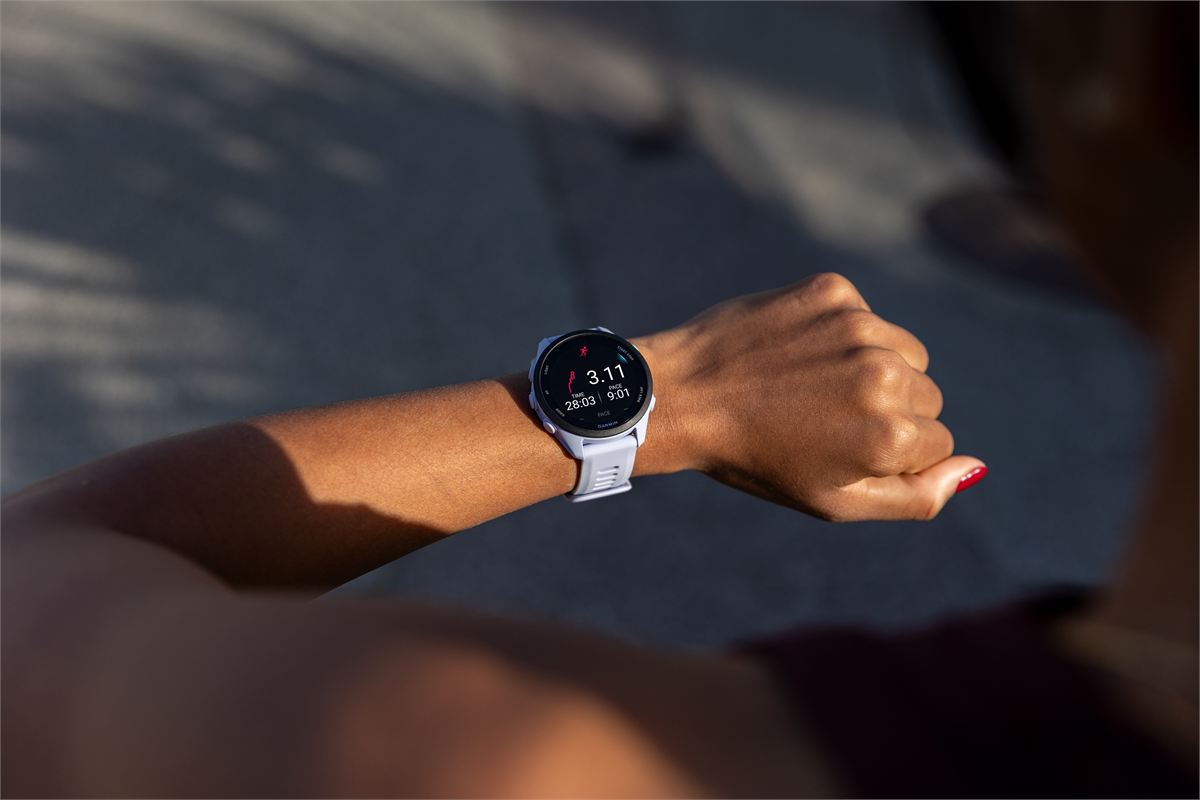
Apple Watch vs Garmin at a glance (October 2026)
| Apple Watch SE 3 | Apple Watch Series 12 | Apple Watch Ultra 4 | Forerunner 70 | Forerunner 170 | Forerunner 570 | Forerunner 970 | |
|---|---|---|---|---|---|---|---|
| US price | From $249 | From $399 | From $799 | $249.99 | $299.99 | $549.99 | $749.99 |
| Battery, everyday use | Up to 18 hours | Up to 24 hours | Up to 50 hours | Up to 13 days | Up to 10 days | Up to 10 or 11 days | Up to 15 days |
| Battery, GPS workout | Up to 7 hours | Up to 10 hours | Up to 18 hours; 45 in Max Extended mode | Up to 23 hours | Up to 20 hours | Up to 18 hours; 13 or 14 with multi-band | Up to 26 hours; 21 with multi-band |
| GPS | Single-frequency | Single-frequency | Dual-frequency | Single-frequency | Single-frequency | Multi-band | Multi-band |
| Daily readiness score | No | Readiness | Readiness | Training Readiness | Training Readiness | Training Readiness | Training Readiness |
| Built-in maps | Offline Apple Maps synced from your iPhone, in select regions | No | No | No | Full-color maps | ||
| Controls | Touchscreen, Digital Crown, side button | Touchscreen, Digital Crown, side and Action buttons | Touchscreen and five buttons | ||||
| Works with | An iPhone 11 or later, or iPhone SE (2nd generation or later) | iPhone or Android | |||||
Battery figures are each maker's claims. Apple's workout figures come from outdoor runs without an iPhone. Garmin's day counts are for smartwatch mode; with the always-on display on, Garmin rates the Forerunner 70 for up to 5 days and the 170 for up to 4. Garmin's GPS figures are for GPS-only mode unless marked multi-band, which uses more power. Garmin prices are list prices on garmin.com, and Apple prices are entry models; larger, cellular, and titanium Apple models cost more.
Apple Watch for running vs Garmin: the key differences
- Battery. This is the biggest gap. Apple rates the SE 3 and Series 12 for 18 and 24 hours of everyday use, so they need charging daily, while every current Forerunner is rated for 10 days or more between charges. On a run, the SE 3's 7-hour and Series 12's 10-hour workout ratings cover most marathons, but not a long trail race. The Ultra 4 is rated for 18 hours of workout tracking, and up to 45 hours in Max Extended mode, which turns off alerts, splits, and running form metrics.
- GPS. Only the Ultra 4 among current Apple Watch models has dual-frequency GPS, the kind that holds up better near tall buildings and under trees; the Forerunner 570 and 970 have it too. Two independent comparisons, one of them a single run of about 10 miles, found Apple's Ultra models close to Garmin's multi-band watches on accuracy, with Garmin slightly ahead in both. The SE 3, Series 12, Forerunner 70, and Forerunner 170 use single-frequency GPS.
- Buttons. Garmin's five buttons work with sweaty fingers, rain, and gloves. Apple relies mostly on the touchscreen; one in-depth independent review of the Ultra 4 found it so-so when wet and mostly unusable with gloves in cold, wet weather, though the Ultra's Action button can mark laps.
- Training tools. Garmin includes Training Readiness, HRV Status, Training Status, race-time predictions, PacePro pacing, daily suggested workouts, running power and form metrics, and free Garmin Coach plans, even on the Forerunner 70. Apple's Workout app shows running power, cadence, stride length, ground contact time, and vertical oscillation, and the watch adds training load, effort ratings, custom interval workouts, Pacer, and Race Route. Its new Readiness score works only on the Series 12 and Ultra 4, and Apple doesn't list built-in running plans.
- Phone and apps. Every current Apple Watch needs an iPhone 11 or later, or an iPhone SE (2nd generation or later). Garmin works with iPhone or Android, though some iPhone owners report AirPods dropping while a Garmin is connected. Apple has the stronger app store, payments, messages, and music; Garmin's smartwatch features are more basic. Strava and Runna work with both.
- Navigation. Apple Watch can store offline Apple Maps from your iPhone with turn-by-turn directions in select regions. Among current Forerunners, only the 970 has full-color built-in maps with course syncing and round-trip routes. The same independent review said navigation is probably Apple's biggest remaining gap against endurance watches.
Is the Apple Watch good as a running watch?
Yes, for many runners. With watchOS 27, the Workout app tracks pace, splits, heart-rate zones, elevation, running power, and form metrics; builds custom workouts with warmups, intervals, and cooldowns; detects track laps; and lets you race your last or best time on a route. Apple's training load compares your last 7 days of workouts with the previous 28, and effort ratings after each workout feed into it. None of that needs a subscription: Apple Fitness+ ($79.99 a year) adds guided workouts but isn't required for the Workout app, training load, or Readiness.
Where it falls short is endurance. The SE 3 and Series 12 need charging every day, the touchscreen is harder to use mid-run than buttons, and only the Series 12 and Ultra 4 get Apple's Readiness score, which needs at least 7 nights of sleep tracking. Workout Buddy, which gives spoken encouragement and pace and distance updates, needs an Apple Intelligence iPhone and Bluetooth headphones. If you want to know whether an Apple Watch alone can handle your training, see our guide to whether the Apple Watch can be your only running watch.
Which Apple Watch is best for runners?
- Ultra 4 ($799): the pick for trails and ultras; the SE 3 and Series 12 also cover most marathons. It has dual-frequency GPS, up to 18 hours of workout tracking (45 in Max Extended mode), a 3,000-nit sapphire display, water resistance to 100 meters, an Action button for laps, and Readiness. It comes only in a 49 mm titanium cellular version.
- Series 12 (from $399): the right Apple Watch for most runners who run up to a few hours at a time. It adds Readiness and a 10-hour workout rating to what the SE 3 does, but uses single-frequency GPS.
- SE 3 (from $249): the budget pick. It records runs with GPS and runs Workout Buddy, but has a 7-hour workout rating and no Readiness score.
Garmin running watch vs Apple Watch: which to buy?
Match them by price, and the choice gets clearer:
- Apple Watch SE 3 ($249) vs Forerunner 70 ($249.99). For running, the Forerunner 70 wins: 13 days of battery against 18 hours, buttons, Training Readiness and Training Status, race predictions, and free Garmin Coach plans. The SE 3 has a barometric altimeter and Apple Pay, which the Forerunner 70 lacks, and is the better smartwatch if you have an iPhone.
- Apple Watch Series 12 ($399) vs Forerunner 570 ($549.99). The Forerunner 570 costs more but adds multi-band GPS, 10 or 11 days of battery, and Garmin's training tools. The Series 12 is the better everyday watch. For less than the Series 12, the Forerunner 170 ($299.99) adds Garmin Pay and a barometric altimeter to the Forerunner 70, and the 170 Music ($349.99) adds music storage; both are rated for up to 10 days and use single-frequency GPS.
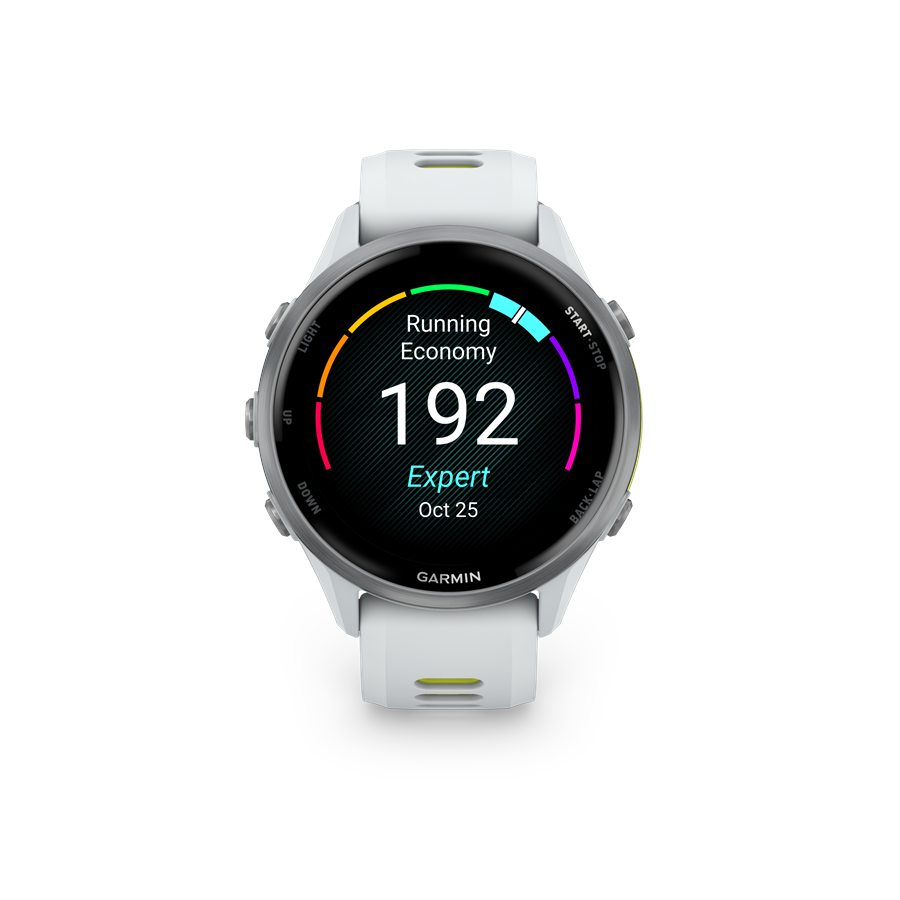
- Apple Watch Ultra 4 ($799) vs Forerunner 970 ($749.99). Both have multi-band GPS and bright, tough screens. The 970 adds 15 days of battery, full-color built-in maps with round-trip routing, an LED flashlight, and Garmin's Running Tolerance and Running Economy metrics; Running Economy needs Garmin's HRM 600 chest strap. The Ultra 4 is the better smartwatch and the closest Apple has come to a training watch.
Three-year cost
Both are one-time purchases, and both subscriptions are optional: Apple Fitness+ costs $79.99 a year, and Garmin Connect+ $69.99 a year, which adds AI insights, a performance dashboard, and extra LiveTrack features rather than core training tools.
| Watch | Watch only | With three years of Fitness+ or Connect+ |
|---|---|---|
| Forerunner 70 | $249.99 | $459.96 |
| Apple Watch SE 3 | $249 | $488.97 |
| Forerunner 170 | $299.99 | $509.96 |
| Apple Watch Series 12 | $399 | $638.97 |
| Forerunner 570 | $549.99 | $759.96 |
| Forerunner 970 | $749.99 | $959.96 |
| Apple Watch Ultra 4 | $799 | $1,038.97 |
US list prices as of October 2026, before tax, using annual plans; the Apple Watch also needs an iPhone, and a cellular plan costs extra on cellular models. Garmin Coach plans are free on every Forerunner here; Apple doesn't list built-in running plans, so an Apple Watch runner who wants one can add an app such as Runna, which also works with Garmin, for $119.99 a year, or $359.97 over three years.
Choose an Apple Watch if...
- You use an iPhone and want one watch for messages, payments, music, and apps as well as runs.
- You run a few times a week and don't mind charging every day, or you buy the Ultra 4.
- You like Apple's Fitness and Health apps and want your runs alongside the rest of your health data.
Choose a Garmin if...
- You train for races and want Training Readiness, race predictions, PacePro, and free coaching plans.
- You want a week or more of battery, buttons that work in rain and with gloves, or an Android phone.
- You want the most training watch for the money: the Forerunner 70 gives you Garmin's core training tools for $249.99.
Bottom line
For running first, buy a Garmin: the Forerunner 70 is the best value, the 570 the step up for multi-band GPS, and the 970 the pick for maps and long races. For an iPhone owner who wants one watch for everything, the Apple Watch Series 12 is a capable running watch, and the Ultra 4 closes most of the gap with dual-frequency GPS and long battery. For more options, see our best running watches guide and the GPS accuracy guide.
FAQ
Is the Apple Watch good for running?
Yes. It tracks pace, splits, heart-rate zones, running power, and form metrics, and builds custom interval workouts without a subscription. Its limits are battery life on the SE 3 and Series 12, a touchscreen that is harder to use mid-run, no built-in running plans, and the need for an iPhone.
Is Garmin better than Apple Watch for running?
For most runners who train for races, yes: the Forerunner 70, 170, 570, and 970 are rated for 10 days or more in smartwatch mode, have buttons, and include Training Readiness, race predictions, and free coaching plans. The Apple Watch is the better smartwatch.
Which is more accurate for running, Apple Watch or Garmin?
Two independent comparisons found Apple's Ultra models and Garmin's multi-band watches close on GPS accuracy, with Garmin slightly ahead in both. The SE 3, Series 12, Forerunner 70, and Forerunner 170 use single-frequency GPS, which is less reliable near tall buildings and under trees.
How long does an Apple Watch last on a run?
Apple rates GPS workout tracking at up to 7 hours on the SE 3, 10 hours on the Series 12, and 18 hours on the Ultra 4, or up to 45 hours in the Ultra 4's Max Extended mode, which turns off some features.
Does the Apple Watch work with Android?
No. Every current Apple Watch requires an iPhone 11 or later, or an iPhone SE (2nd generation or later). Garmin watches work with iPhone and Android.
Do I need a subscription for running features?
No. Apple's Workout app, training load, and Readiness don't need Apple Fitness+, and Garmin's training tools don't need Connect+. Both subscriptions add extras.
Which Apple Watch is best for marathon training?
The Series 12 for most marathoners: it is rated for 10 hours of workout tracking, enough for a marathon on one charge, and has Readiness, though it needs charging every day. The Ultra 4 adds dual-frequency GPS and an 18-hour workout rating, for trails, ultras, and courses with tall buildings or tree cover.