 By Raji Shah · Published 2026-10-19
For a new runner, a Forerunner is the better first buy. For $50 more than the $199.99 Garmin Cirqa, the $249.99 Forerunner 70 adds a screen, built-in GPS, pace and heart rate on your wrist, and free Garmin Coach running plans, while keeping the same core recovery metrics if you sleep in it. The Cirqa makes more sense as a second device, or for someone who cares more about sleep and recovery than about pace. The Forerunner 165 still sells at the same $249.99, but Garmin now lists it as a previous model, and the trade-offs below explain which of the two watches to pick.
Quick answer: buy the Forerunner 70 if running is the main reason you want a Garmin. It shows pace and heart rate during the run, records GPS without your phone, runs free Garmin Coach plans, and includes Training Readiness and Training Status. Pick the Forerunner 165 only if you find it discounted and want Garmin Pay or a barometric altimeter; the $299.99 Forerunner 170 adds both to the Forerunner 70. Buy the Cirqa if you mostly want sleep, recovery, and daily activity tracking in a screen-free band, or later, as a second device to wear next to a watch. Prices are US list prices as of October 2026.
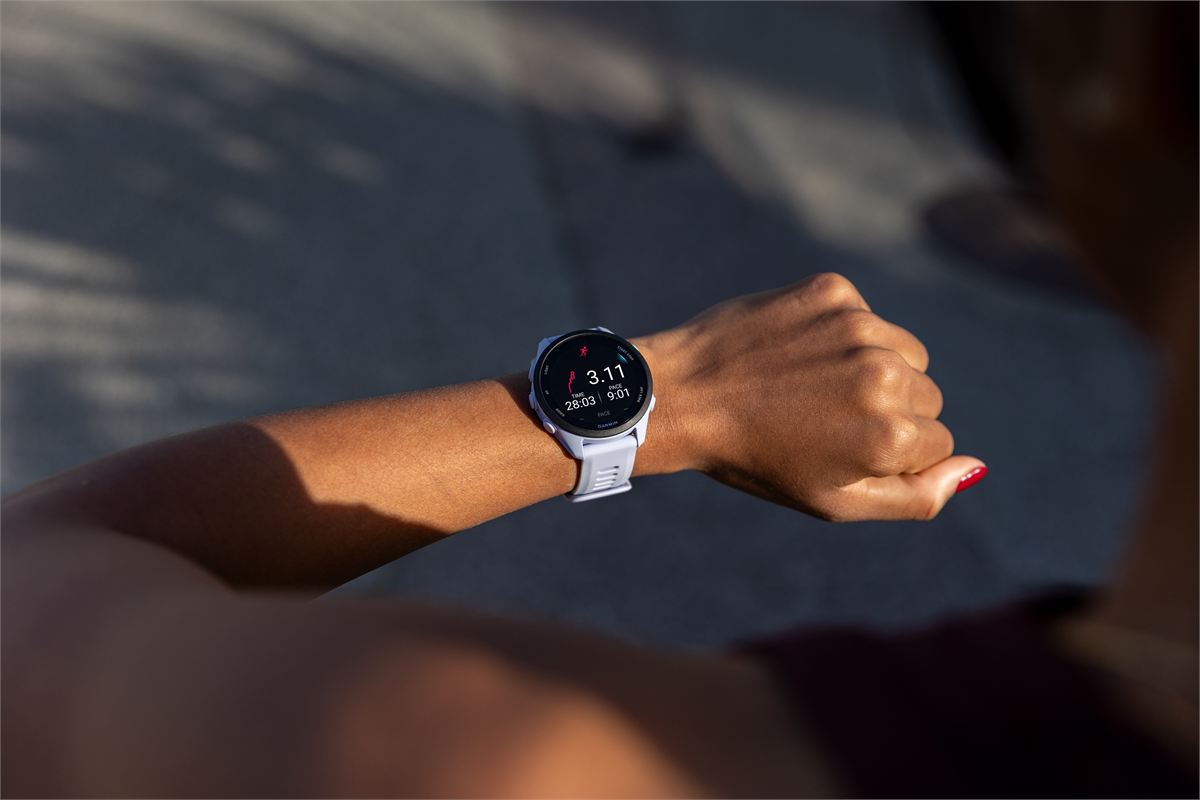
What the extra $50 buys
| Garmin Cirqa | Forerunner 70 | Forerunner 165 | |
|---|---|---|---|
| US price (October 2026) | $199.99 | $249.99 | $249.99 (listed as a previous model) |
| Screen | None; one button and a status LED | 1.2-inch AMOLED touchscreen plus buttons | 1.2-inch AMOLED touchscreen plus buttons |
| GPS | Your phone's GPS only | Built in (GPS, GLONASS, Galileo) | Built in (GPS, GLONASS, Galileo) |
| Pace and heart rate during a run | In the Garmin Connect app on your phone | On your wrist | On your wrist |
| Garmin Coach running plans | Not listed; Coach plans on the band are strength and fitness, with Connect+ | Free | Free (5K, 10K, half marathon) |
| Race predictor and PacePro | Not listed | Yes | Yes |
| Training Readiness and Training Status | Yes | Yes | No |
| HRV Status, Body Battery, sleep score | Yes | Yes | Yes |
| Voice alerts | None announced | Yes | Yes |
| Garmin Pay and barometric altimeter | No | No | Yes |
| Battery (Garmin's claims) | Up to 10 days | Up to 13 days; 23 hours of GPS | Up to 11 days; 19 hours of GPS |
The gap is mostly what happens during the run. A Forerunner shows your pace, distance, and heart rate as you go, records the route without your phone, and guides intervals and Garmin Coach plans on the wrist. The Cirqa records a run with your phone's GPS; you start and stop it in the app, or with its button once you set the band's favorite activity to Run in Garmin Connect, and you see your numbers on the phone. Garmin staff said in August 2026 that no audio prompts have been announced for the band.
Forerunner 70 or Forerunner 165?
At the same $249.99, they trade different things. Garmin's US spec tables show:
- Only the Forerunner 70 has Training Readiness, Training Status, training load with load focus, sleep coach, an evening report, quick workouts, Garmin Coach strength plans, and more than 80 sports apps against the 165's 25-plus. Its battery lasts longer in most modes: 13 days against 11, and 23 hours of GPS against 19.
- Only the Forerunner 165 has Garmin Pay, a barometric altimeter for floors climbed and elevation, a compass, a thermometer, open-water swim tracking, and 4 GB of storage against 512 MB.
For a new runner, the Forerunner 70's training features matter more than contactless payments, so it is the better pick at list price. The 165 is the older model: Garmin files it under previous models, the 165 Music version has left Garmin's US store, and Garmin's own store has cut the 165 to $199.99 at times this year. At that price, it is worth a look if Garmin Pay or elevation data matters to you. If you want the Forerunner 70's training features plus Garmin Pay and a barometric altimeter, the Forerunner 170 ($299.99) adds both, though Garmin rates its battery below the Forerunner 70's, at up to 10 days and 20 hours of GPS; the 170 Music ($349.99) adds music storage.
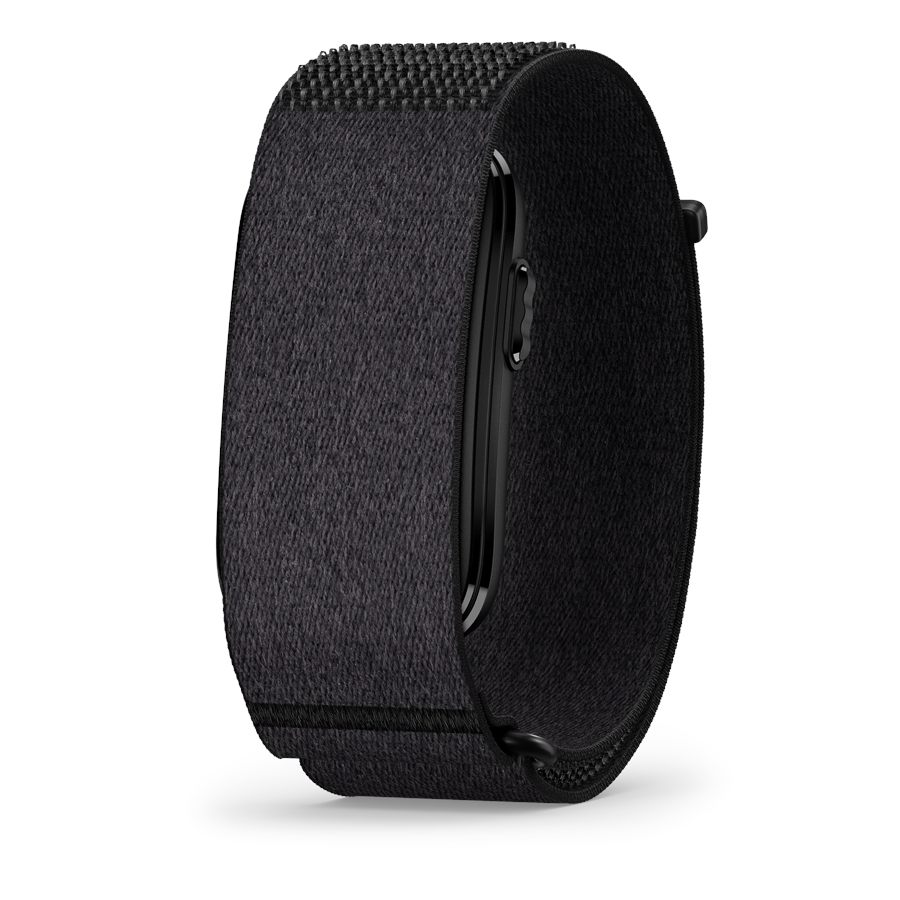
What the Cirqa does better
The Cirqa is a band, not a watch, and it is built for wearing all day and night. For $50 less, it tracks the same recovery data as the Forerunner 70: Training Readiness, Training Status, HRV Status, Body Battery, sleep score, and training load, plus skin temperature, which none of these Forerunners lists. The difference is what you sleep in. If a Forerunner is your only device, its sleep score and HRV Status come only from nights you wear it to bed, and Training Readiness draws on both; Garmin's Forerunner 70 manual says HRV Status needs three weeks of consistent sleep data. At about 21 g with its strap, the Cirqa weighs about half as much as the 40 g Forerunner 70. It also estimates running VO2 max after a timed 15-minute brisk walk or run. Everything shows up in the Garmin Connect app with no subscription.
The limits are on the run itself. Garmin's spec table lists only distance, time, pace, and cadence from your phone's GPS for running, with no race predictor, PacePro, running power, or running workouts. Garmin Coach plans and the workout library, free on Forerunners, need a Connect+ subscription on the Cirqa, and Garmin's Cirqa page lists only strength and fitness Coach plans. Our Garmin Cirqa review covers the band in full.
Can the Cirqa replace a running watch?
Only for easy, unstructured running with your phone in your pocket. If you run by feel and check the numbers afterward, the Cirqa records the run, scores it, and feeds Training Status. If you follow a plan, run intervals, chase a pace, or race, you will want a watch: without a screen or voice cues, there is no way to see your pace or follow a workout mid-run without pulling out your phone. Leave the phone at home and the band still records the run, but it estimates distance from motion, which can be well off in either direction. Owners have also reported lost workouts on the band; our Cirqa problems guide covers the causes and fixes.
The cost math
| Setup | US list price (October 2026) |
|---|---|
| Garmin Cirqa | $199.99 |
| Cirqa plus one year of Connect+ | $269.98 |
| Forerunner 70 or 165 | $249.99 |
| Forerunner 70 plus Cirqa | $449.98 |
| Forerunner 70, Cirqa, and the Upper Arm Band | $509.97 |
| Forerunner 265, for comparison | $449.99 |
A Cirqa plus a year of Connect+ ($69.99), which the band needs for Garmin Coach strength and fitness plans and guided workouts, costs more than a Forerunner 70, which includes those free. The Forerunner 70 also includes free Garmin Coach running plans, which Garmin doesn't list for the band even with Connect+. A Forerunner 70 and a Cirqa together cost about the same as a Forerunner 265 alone. Neither device requires a subscription for its core features.
Starting with a watch and adding the Cirqa later
Garmin sells the Cirqa as a companion to its watches. Wear the Forerunner for runs and the Cirqa for sleep and the rest of the day, and Garmin Connect merges the two. Garmin's general advice is to use one device as both Primary Training Device and Primary Wearable, but if the watch comes off after runs, make a Forerunner 70 or 170 the Primary Training Device and the band the Primary Wearable. Both watches support Garmin's Unified Training Status, which shares training data between devices. The Forerunner 165 does not, and because it has no Training Status, Garmin won't accept it as the Primary Training Device; the band takes that role, and its Training Readiness and Training Status show in Garmin Connect, not on the watch. That is one more reason to pick the Forerunner 70 if you plan to add the band. If you run hard intervals, the Cirqa's $59.99 Upper Arm Band is worth budgeting for only if the watch will use the band as its heart-rate sensor. Garmin says the band can broadcast heart rate to compatible Garmin devices but names only Edge bike computers; two owners on Garmin's forum report using it with a Forerunner, and one independent review found the band on the upper arm matched a chest strap during workouts. Our guide to using the Cirqa with a Forerunner covers the settings.
Which should you buy?
- Choose the Forerunner 70 if you are starting to run and want pace on your wrist, built-in GPS, free training plans, and Training Readiness.
- Choose the Forerunner 165 if you find it discounted and want Garmin Pay or elevation data more than Training Readiness and Training Status.
- Choose the Cirqa if sleep, recovery, and daily activity matter more to you than pace, or you run casually with your phone.
- Buy both, watch first, if you want pace on your runs but would rather not sleep in a watch; a Forerunner 70 and a Cirqa cost $449.98 together.
Bottom line
A first running device should show you your pace and guide your workouts, and only a watch does that. The Forerunner 70 does it for $249.99 with the same core recovery metrics as the Cirqa, as long as you sleep in it, so it is the better first buy for most new runners. Add the Cirqa later if you would rather not sleep in the watch, or start with it if running is a small part of why you want a Garmin. For the wider choice, see our guide to the best running watches.
FAQ
Should I buy a GPS watch before a Garmin Cirqa?
If running is your main goal, yes. A Forerunner 70 costs $50 more than the Cirqa and adds a screen, built-in GPS, pace on your wrist, and free Garmin Coach running plans, with the same core recovery metrics if you sleep in the watch.
Can the Garmin Cirqa replace my running watch?
Only for easy runs with your phone. The Cirqa uses your phone's GPS and shows pace in the Garmin Connect app, but it has no screen or voice cues, and Garmin lists no running plans, race predictor, or PacePro for it.
Is the Forerunner 165 still worth buying?
At $249.99, the Forerunner 70 is the better buy for most runners because it adds Training Readiness, Training Status, and longer battery in most modes. The 165 is worth it at a discount if you want Garmin Pay or a barometric altimeter.
Does the Cirqa have the same training metrics as a Forerunner?
It matches the Forerunner 70 for recovery and load: Training Readiness, Training Status, HRV Status, Body Battery, and training load. The Forerunner 165 has HRV Status and Body Battery but no Training Readiness, Training Status, or training load, so on those the $199.99 band offers more than the $249.99 watch. For running, Garmin lists no race predictor, PacePro, running power, or Garmin Coach running plans for the Cirqa.
Do I need Garmin Connect+ for either?
No. Both work without a subscription. On the Cirqa, Garmin Coach strength and fitness plans and guided workouts need Connect+ ($69.99 a year), while the Forerunner 70 includes them free, along with Garmin Coach running plans.
Can I use the Cirqa and a Forerunner together?
Yes. Garmin Connect merges the two: set a Forerunner 70 or 170 as your Primary Training Device and the device you wear most as your Primary Wearable. Garmin lists Unified Training Status, which shares training data between devices, for both watches and the band. The Forerunner 165 has no Training Status, so Garmin won't accept it as the Primary Training Device; the band takes that role, and its Training Readiness and Training Status show in Garmin Connect, not on the watch.