 By Raji Shah · Updated 2026-10-19
The Cirqa is Garmin's answer to a question plenty of runners have asked: what if the watch did not have to come to bed? Garmin left out the screen, the GPS, and any required subscription, and kept the thing it is quietly best at: a deep stack of sleep, recovery, and training metrics.
Quick verdict: buy the Cirqa if you want Garmin's sleep, HRV Status, Body Battery, and Training Readiness without sleeping in a watch or paying a subscription. Skip it if you need live pace, standalone GPS, or dependable wrist heart rate in fast intervals.
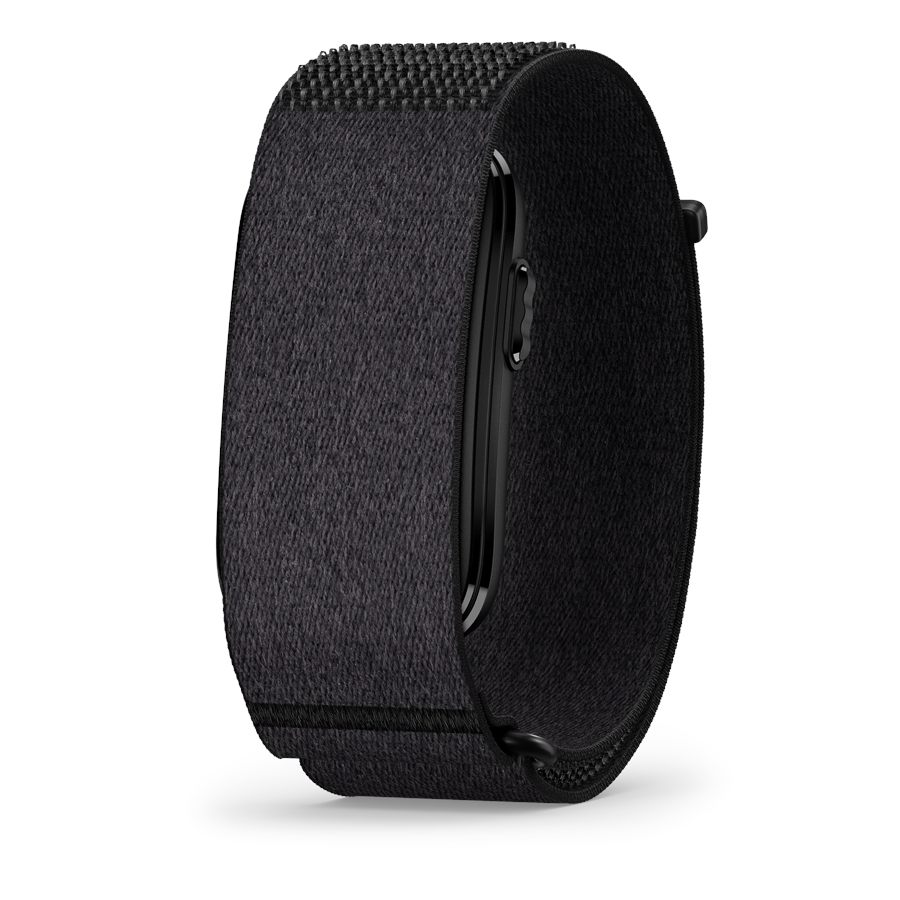
What the Cirqa is—and is not
The Cirqa (Garmin styles it CIRQA) is a small sensor pod on a fabric strap, worn on the wrist or, with an optional band, the upper arm. It has one button, a status LED, and vibration for alarms and alerts; everything else lives in the Garmin Connect app. Firmware 4.20 adds vibration for smart notifications and incoming calls, but Garmin began rolling it out in stages on October 19, 2026, so your band may not have it yet.
| Spec | Garmin Cirqa | Why it matters for runners |
|---|---|---|
| Price | $199.99 / £179.99 as of October 2026; no subscription required | Connect+ and the $59.99 Upper Arm Band are optional extras. |
| Display | None; LED and vibration only | No live pace, laps, or heart rate on your wrist. |
| GPS | None built in; uses your phone's GPS | Carry your phone for outdoor pace, distance, and route. |
| Battery | Up to 10 days (Garmin's claim) | Workouts, all-day Pulse Ox, and HR broadcasting shorten it. |
| Weight and size | 20.7-21.2 g with strap; 27 x 47 x 9 mm pod | Light, but the pod is long on small wrists. |
| Water rating | 5 ATM | Fine for rain, sweat, showers, and the pool. |
| Sensors | Optical heart rate, Pulse Ox, skin temperature, accelerometer | No ECG and no barometric altimeter. |
| Heart-rate broadcast | ANT+ and Bluetooth | Can feed a bike computer, indoor-training apps, or compatible gym equipment. |
What the Cirqa gets right
It is easy to live with. At about 21 grams, the Cirqa barely registered on our wrists, including overnight. That matters: a recovery tracker only works if it stays on through sleep, and plenty of runners take their watch off at night.
The button is a real advantage. One press starts your favorite activity and another stops it, with a vibration to confirm, so you decide when a workout begins instead of waiting for auto-detection. Set the favorite to Run in the Garmin Connect app first; out of the box, the button logs a basic timed activity with no distance.
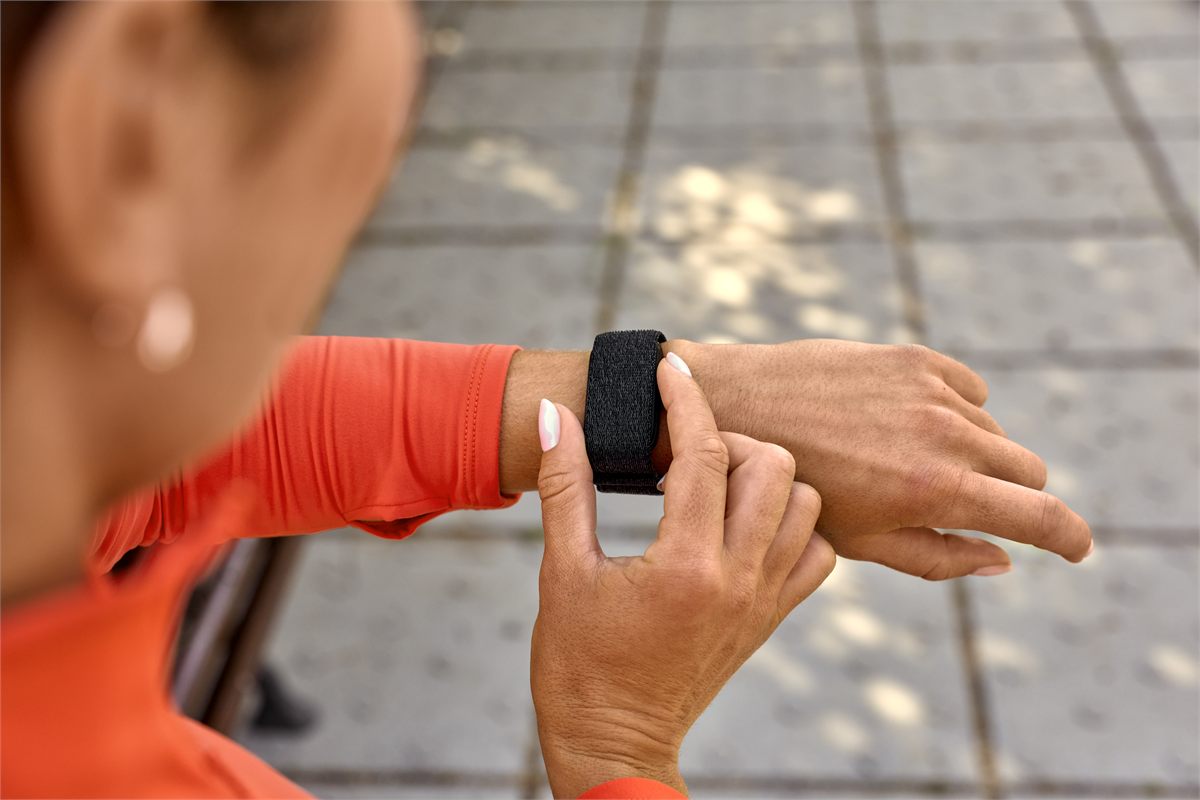
You get Garmin's training model for free. Training Readiness, Training Status, training load, HRV Status, Body Battery, sleep score and sleep coach, recovery time, and a running VO2 max estimate all work without a subscription, and the data merges with your Garmin watch or Edge.
Where it frustrates runners
No screen means no live numbers. Apart from vibration alerts, there is no pace, lap split, or heart-rate readout during a run unless you pull out your phone. For easy runs that can be refreshing. For workouts, tempo runs, and races, it is a real limitation.
Your phone is the GPS. Without it, the band estimates distance from motion, so treat phone-free run distances as rough.
Running tools are app-only, paid, or missing. You can only pause from the app, manual laps are listed as a Connect+ feature (distance-based Auto Lap is free), and Garmin lists no running plans, race predictor, or running power for the Cirqa.
Auto-detection has a blind spot. The heart-rate sensor stays in low-power mode until the band recognizes a workout, so if detection starts late, the first part of your session has no workout-level heart rate, and editing the activity afterward will not recover it. A run the band misses entirely adds nothing to your training load. We got more consistent results starting runs with the button.
The software launch was rough. Garmin's forum staff have acknowledged owner reports that a band-started workout can be lost if you tap End on the Garmin Connect "Activity in Progress" prompt; tap Resume instead, then stop and save from the recording screen. Owners have also reported Bluetooth heart-rate broadcast dropouts after an August update (ANT+ kept working), and heart-rate and sleep tracking that stalled after charging until the band was restarted. Firmware 3.20, a staged rollout that began in early September, added a Bluetooth pairing mode for broadcasting, treadmill recalibration, and other fixes, and some owners reported broadcasting working again afterward, though not all. Garmin's release notes for firmware 4.20 do not mention these problems. Still, keep the band updated and see our Cirqa troubleshooting guide for workarounds.
Accuracy: what to expect from a screen-free band
Like most wrist optical sensors, the Cirqa is best at steady efforts and weakest at fast changes; our optical heart-rate guide explains why.
| Situation | What to expect | Better approach |
|---|---|---|
| Sleep timing and total sleep | Credible on the wrist. | Wear it on the wrist overnight. |
| Sleep stages and awake time | Less certain. Some comparisons found it logs less awake time than other trackers. | Watch weekly trends, not one night's score. |
| Overnight resting heart rate and HRV | Resting heart rate closely matches other devices; HRV values differ between brands. | Compare against your own baseline. |
| Easy and steady runs | Close to a chest strap. | The wrist is fine. |
| Short, fast intervals | Wrist readings can lag at the start of reps. | Use the upper arm, or a watch with a chest strap. |
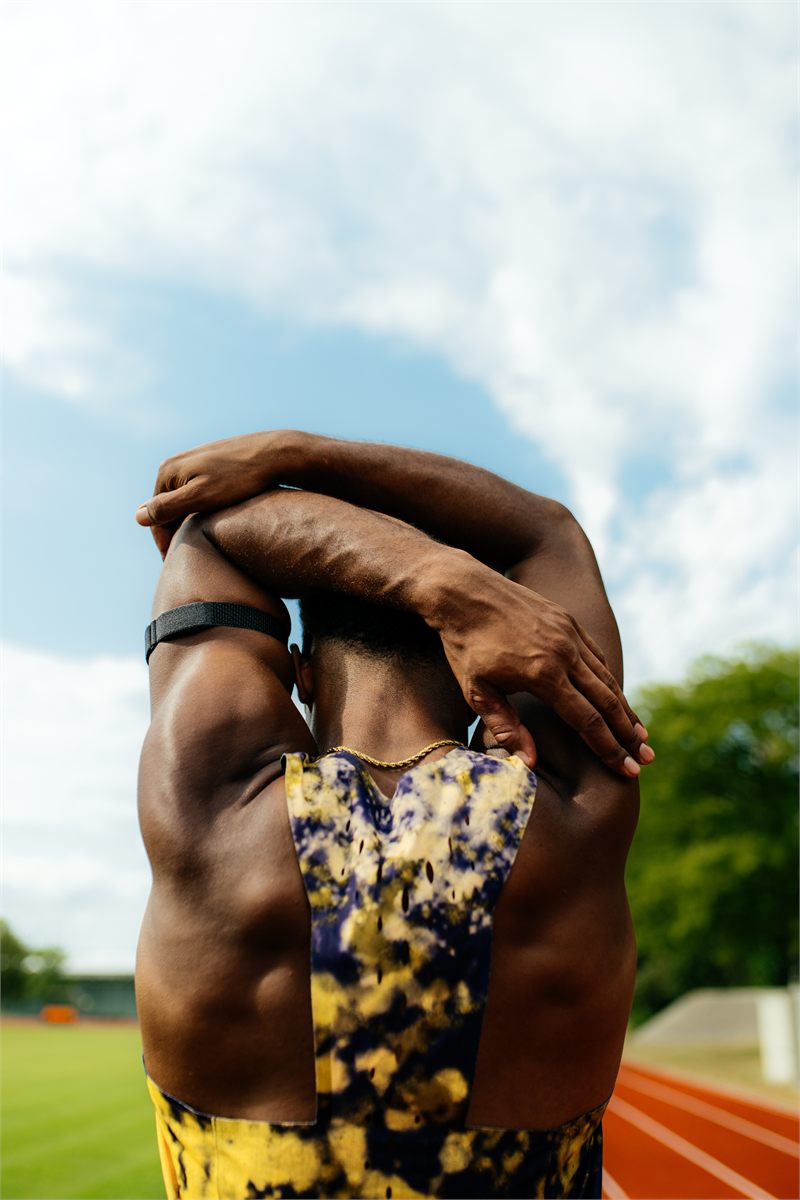
For hard sessions, the upper arm is the better spot. In our testing, moving the pod to the Upper Arm Band cleaned up the intervals that tripped up the wrist, though you lose a few wrist-only features, such as automatic rep counting.
For HRV, watch your own trend. Garmin's HRV Status compares a seven-day average of your overnight HRV with a personal baseline range, which takes about three weeks of consistent sleep data to set. More in our HRV guide for runners.
Battery, charging, and comfort
Garmin rates the Cirqa for up to 10 days. In our testing, regular workouts and Pulse Ox pulled it a little short of that. All-day Pulse Ox and heart-rate broadcasting both cost battery, so sleep-only Pulse Ox is the sensible middle ground.
Charging uses Garmin's proprietary watch-style cable and takes up to 90 minutes with the band off your wrist, so build the habit around a shower or a desk session rather than sleep.
The pod is the Cirqa's biggest physical compromise. At 47 mm long, it can overhang a narrow wrist, and swapping straps means wrestling small spring-bar pins. The fabric strap is machine-washable once the pod is removed, but it can stay damp for a while after a swim.
Garmin Connect, Connect+, and the no-subscription promise
Garmin Connect+ ($6.99 a month or $69.99 a year in the US as of October 2026) is optional, but it gates more on the Cirqa than on Garmin's watches because the band has no screen.
- Free: health, sleep, and training metrics, activity tracking, phone GPS, and current heart rate during app-recorded workouts.
- Connect+ only: live heart-rate and zone graphs, manual laps, guided workouts and Garmin Coach strength and fitness plans, guided breathwork and guided meditation, nutrition tracking, and AI insights.
Garmin Connect itself is the other tradeoff. It is deep and customizable, but it presents data more than it explains it. Runners who like digging through charts will be at home; anyone who wants a coach-style daily narrative will find WHOOP's app easier to read.
Using the Cirqa with a Garmin watch
Garmin pitches the Cirqa as a companion to its watches, and the setup is simple: the Cirqa handles daily wear and sleep, your Forerunner or Fenix handles training, and Garmin Connect merges the data into one account.
- Set your primary devices. In Garmin Connect, make the device you wear most (usually the Cirqa) your Primary Wearable for daily metrics such as steps and sleep, and choose a Primary Training Device for training status and load focus.
- Record each run on one device. Recording on both adds nothing, and one reviewer lost several Cirqa workouts while another device was recording, though the cause is unconfirmed.
- Pair sensors with the watch. The Cirqa cannot use a chest strap or other external sensors.
Cirqa vs the alternatives
| Option | Upfront cost | Ongoing cost | Best for |
|---|---|---|---|
| Garmin Cirqa | $199.99 | None required; Connect+ optional | Garmin users who want watch-free 24/7 data |
| WHOOP | $199-$359 for the first year, device included | Renews at $199, $239, or $359 a year by tier | Athletes who want a coaching-first recovery app |
| Fitbit Air | $99.99 | None required; Google Health Premium optional | Budget buyers who want a lighter, cheaper band |
| Polar Loop | $199.99 | None required | Polar users who want a subscription-free band |
| Garmin Index Sleep Monitor | $169.99 | None required | Sleep data for a Garmin watch you do not wear to bed |
Prices are US list prices as of October 2026; verify them at checkout. For the full subscription math, read our Garmin Cirqa vs WHOOP breakdown.
Who should buy the Cirqa
- Garmin watch owners: sleep and recovery data without wearing the watch to bed.
- Cyclists with a Garmin Edge: all-day tracking plus heart-rate broadcast on the bike.
- Runners who already carry a phone: readiness, HRV, and training-load context.
- Subscription skeptics: serious training metrics with no monthly fee.
Who should skip it
- You want one device for training. A similarly priced GPS running watch gives you a screen, live pace, and standalone GPS.
- You run hard intervals and do not want the arm band. Wrist readings can lag at the start of fast reps.
- You swim seriously. Wrist heart rate in the water has tested poorly.
- You have small wrists. The 47 mm pod can overhang.
- You want coaching more than data. WHOOP's app explains the numbers better.
- You are on a budget outside Garmin. Cheaper screen-free bands cover the basics.
What to verify before buying
- Price and ship time: confirm both on Garmin's Cirqa page. In mid-October, about half of the US color and size versions shipped within days and the rest quoted 8-12 weeks; UK and several EU stores quoted 8-12 weeks or more.
- Size: the S-M strap fits 120-200 mm wrists and the L-XL strap fits 145-240 mm.
- Arm band: budget $59.99 for the Upper Arm Band if you run hard intervals; Garmin's US store quoted 8-12 weeks to ship in mid-October.
- Return window: Garmin.com takes returns within 30 days of delivery (other retailers vary); use that time to test comfort, sleep tracking, and whether the data changes your training.
Verdict
The Cirqa is not a running watch, and runners who buy it as one will be disappointed. As a 24/7 companion it is excellent: comfortable, dependable on steady runs and overnight trends, and a subscription-free way to keep Garmin's readiness and recovery data flowing around the clock. Pair it with a Garmin watch, or accept your phone as your running computer, and it earns its place.
FAQ
Does the Garmin Cirqa have GPS?
No. The Cirqa uses your phone's GPS through the Garmin Connect app for outdoor pace, distance, and route. Without the phone, distance comes from motion and is much less reliable.
Does the Garmin Cirqa need a subscription?
No. Sleep, HRV Status, Body Battery, Training Readiness, Training Status, and activity tracking are free in Garmin Connect. Optional Connect+ adds live heart-rate graphs, manual laps, guided workouts, Garmin Coach strength and fitness plans, and AI insights.
How long does the Garmin Cirqa battery last?
Garmin claims up to 10 days. In our testing, regular workouts and Pulse Ox pulled it a little short of that. All-day Pulse Ox and heart-rate broadcasting shorten it further, and a full charge takes up to 90 minutes.
Is the Garmin Cirqa accurate for running heart rate?
Mostly. Steady-run wrist heart rate generally tracks a chest strap closely, and it held up well in our testing. Short, fast intervals can lag on the wrist; the optional upper-arm band improves hard-effort readings.
Can I wear the Garmin Cirqa with my Garmin watch?
Yes. Garmin Connect merges data from both. Set your Primary Wearable and Primary Training Device, record each run on one device, and let the Cirqa cover sleep and daily tracking.