 By Raji Shah · Published 2026-10-19
If you train with a watch on Garmin's Body Battery TrueUp list and just don't want to sleep in it, the $169.99 Index Sleep Monitor is the cheaper way to get Garmin's sleep data: it goes on your upper arm at night and hands sleep, HRV, and Body Battery to your watch. The $199.99 Cirqa is the better buy if you have no Garmin watch or one that isn't on that list, or want daytime tracking too, because it works on its own around the clock. Neither band has been independently validated for sleep, and owners report lower overnight HRV on both than on their watches.
Quick answer: buy the Index Sleep Monitor if you train with a watch on Garmin's Body Battery TrueUp list, such as a Forerunner 265, 570, or 970, a fenix 8, or a Venu 4, and want sleep data without wearing the watch to bed. The watch has to come off at night, and owners report pairing and sync problems. Buy the Cirqa if you have no Garmin watch, have one that isn't on the list (such as a fenix 6, a non-Pro fenix 7, or a Forerunner 945), or want steps, workouts, and naps tracked too; sleep in it on your wrist and make it your Primary Wearable. Don't buy both just for sleep. Prices are US list prices as of October 2026.
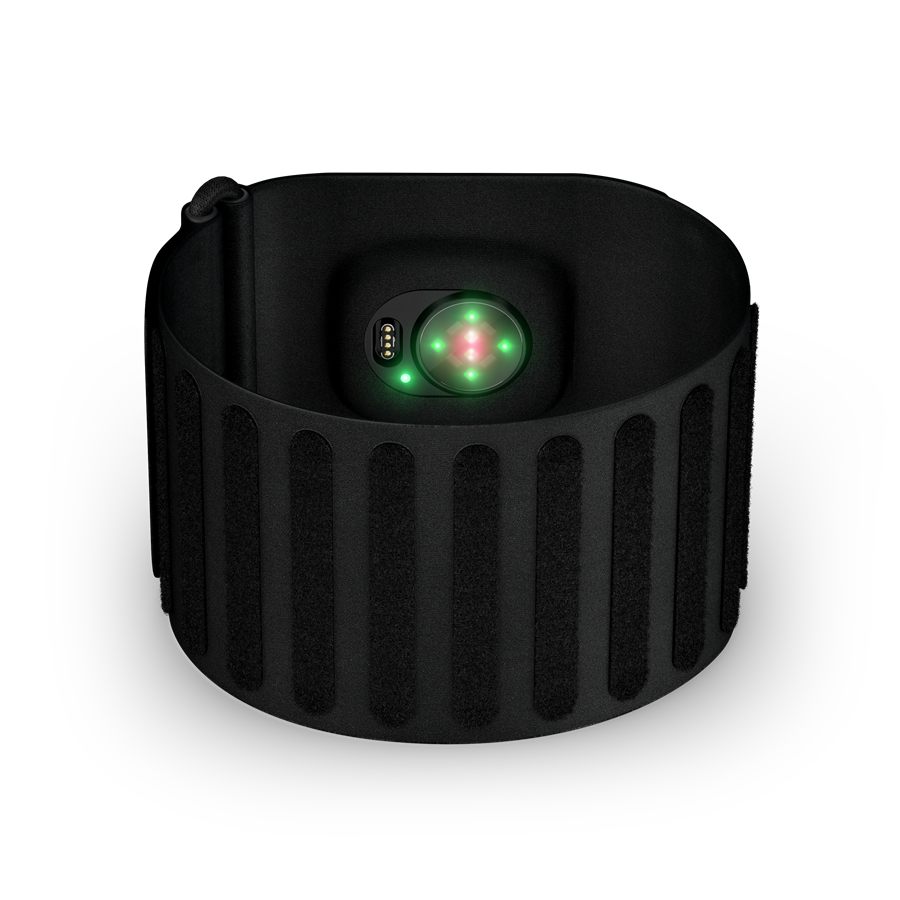
Cirqa vs Index Sleep Monitor at a glance
| Index Sleep Monitor | Garmin Cirqa | |
|---|---|---|
| US price (October 2026) | $169.99 (S–M or L–XL) | $199.99 |
| Where you wear it | Upper arm, above the elbow | Wrist, or upper arm with the $59.99 Upper Arm Band |
| When you wear it | In bed only; Garmin says to take it off as soon as you wake | Day and night |
| Sleep score, stages, and Sleep Coach | Yes | Yes |
| HRV Status, skin temperature, Pulse Ox, respiration | Yes | Yes |
| Body Battery | Only if your Primary Wearable supports Body Battery TrueUp | Yes |
| Naps | Not recorded, per Garmin | Nap detection |
| Smart wake alarm | Yes, in the 30 minutes before the alarm; double-tap the pod to snooze | Yes, in the 30 minutes before the alarm; press the button to snooze |
| Training Readiness and recovery time | Calculated by your watch, using the band's sleep data | Calculated by the band |
| Steps, workouts, and all-day stress | No | Yes, with your phone's GPS for outdoor routes |
| Heart-rate broadcast | No | Yes (ANT+ and Bluetooth) |
| Notification alerts | None | Vibration for notifications and calls in software 4.20, rolling out from October 19, 2026 |
| Battery (Garmin's rating) | 7 nights, with Pulse Ox on and 8-hour nights | Up to 10 days |
| Pulse Ox settings | Always on overnight; no off switch | All day, during sleep, or off |
| Weight with band | About 30 to 35 g | About 21 g on the wrist band |
| Water | 5 ATM, but Garmin says the pod should see only rain or splashes; the band is machine-washable | 5 ATM, with a basic swim profile |
| Subscription | None required | None required; Connect+ adds extras such as Garmin Coach strength and fitness plans, the workout library, and guided breathwork and meditation |
What the Index Sleep Monitor does, and what it leaves to your watch
Garmin built the Index Sleep Monitor for people who own a Garmin watch but don't want to sleep in it. You slide it onto your upper arm at bedtime; Garmin says it is designed for sleep only.
Overnight it records the same data a Garmin watch does: sleep score and stages, Sleep Coach's suggested sleep need, HRV Status, Body Battery, overnight heart rate and stress, Pulse Ox, respiration, breathing variations, and skin temperature. Its vibrating smart wake alarm can wake you during the 30 minutes before your alarm time. You set alarms in the Garmin Connect app, since the band has no screen or buttons.
It calculates nothing about training. Your watch works out Training Readiness and recovery time using the band's sleep data, so the watch on your Garmin Connect account decides what you get:
- The watch stays your Primary Wearable. Garmin says the band doesn't need to be one.
- The watch has to come off. If you wear the watch and the band to bed, Garmin Connect uses the watch's sleep. Garmin's advice is to take the watch off, make sure its sensor lights are off, keep your phone with Garmin Connect in range, and remove the band as soon as you wake so it syncs.
- The band has to sync first. Garmin staff explained in July 2025 that your watch's morning report includes the band's data only if the band syncs to Garmin Connect before the watch does.
Which Garmin watches work with the Index Sleep Monitor
Garmin publishes no single compatibility list. The band pairs with the Garmin Connect app, not your watch, so it records sleep whichever Garmin watch you own, or with none; the watch decides the extras. For Body Battery, your Primary Wearable has to be on Garmin's Body Battery TrueUp list. Its September 2026 version includes these running watches:
- Forerunner 70, 165, 170, 255, 265, 570, 955, 965, and 970
- fenix 7 Pro, 8, 9, and E; epix Pro (Gen 2); Enduro 3
- Venu 3, 4, and X1; vivoactive 5 and 6
The fenix 6, the non-Pro fenix 7 and epix Gen 2, the Forerunner 245, 745, and 945, and the Venu 2 aren't on it. At least 18 owners on Garmin's forum, most with watches outside the list, reported no overnight Body Battery from the band between July 2025 and August 2026. In August 2025, Garmin staff said the band had to be paired with a Body Battery TrueUp-capable device and that Garmin was reviewing ways to improve this, with no timeline.
Two more features depend on the watch:
- Sleep Alignment works with the band only when a compatible wearable is paired to the same account, according to Garmin's September 2026 sleep FAQ. Its list includes the Forerunner 570 and 970, the fenix 8, 9, and E, the Enduro 3, and the Venu 4 and X1.
- Training Readiness can miss the band's sleep data, depending on the watch. In August 2025, Garmin staff said watch software 12.70 improved this on the fenix 8 series, Forerunner 570 and 970, vivoactive 6, and Venu X1. For older watches they suggested a workaround: sync the watch, put on the band, power the watch off overnight, and in the morning let the band sync before you turn the watch back on. At least 8 owners reported Training Readiness missing sleep or stress data between July 2025 and February 2026, including two fenix 8 owners in January 2026, months after the 12.70 update.
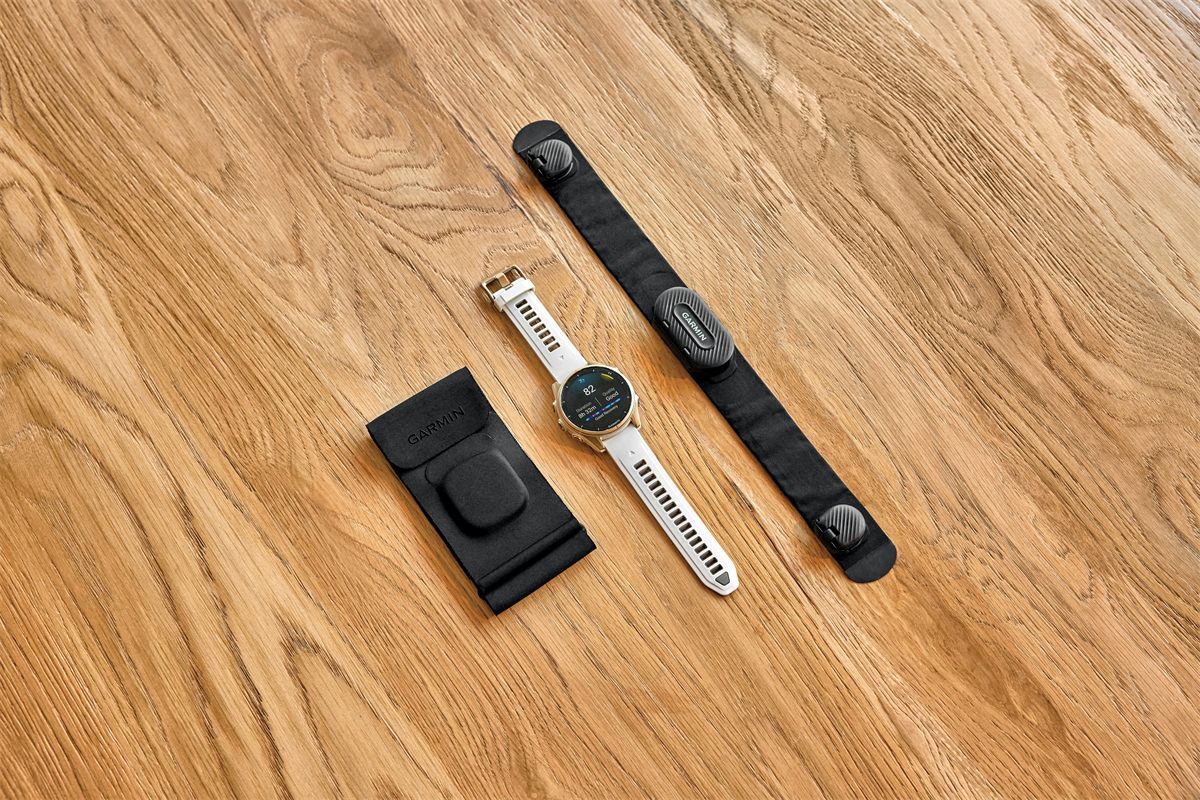
Sleeping in the Cirqa instead
The Cirqa records the same overnight data as the Index Sleep Monitor, plus naps, and then keeps going through the day: steps, all-day stress, dozens of activity profiles with automatic detection, routes from your phone's GPS, and heart-rate broadcast to other devices. It calculates its own Training Readiness, Training Status, HRV Status, and recovery time, so it doesn't need a watch at all. Our Garmin Cirqa review covers it in full.
Three things to get right if you sleep in it:
- Make it your Primary Wearable. Garmin's sleep FAQ tells owners of more than one device to wear their Primary Wearable to bed, and the Primary Wearable's sleep and Body Battery win when two devices record the same night. One owner who kept an older fenix 6 as Primary Wearable while sleeping in the Cirqa got a sleep score but no Body Battery. Unlike the fenix 6, the Cirqa is on Garmin's September 2026 Body Battery TrueUp list.
- Wear it on your wrist at night. The $59.99 Upper Arm Band is better for hard runs, but one owner reports overnight HRV about 10 ms lower after moving the pod to the biceps, and one hands-on review found sleep times on the biceps usually 10 to 20 minutes off.
- Check your sleep schedule. At least 9 Cirqa owners in one Garmin forum thread (August to October 2026) said the band started their sleep late, by about 2 to 3 hours where they gave a figure, or missed the first part of the night. Two said moving the sleep schedule earlier in Garmin Connect helped.
Garmin's documents disagree on one feature: the Cirqa's product page lists Sleep Alignment, but Garmin's September 2026 sleep FAQ doesn't list it for the band. Our guide to wearing the Cirqa with a Garmin watch covers the Primary Wearable settings and auto-detection.
How accurate are they for sleep and HRV?
No one has published a validation of either band, Garmin included, as of October 2026. The evidence comes from older Garmin devices, research on sensor placement, hands-on reviews, and owners:
- Sleep timing holds up better than stages and awake time. In five independent sleep-lab studies of older Garmin wrist devices, Garmin caught nearly all sleep but missed most time awake, so it overstated total sleep by about 28 to 47 minutes a night, and agreement on sleep stages was only slight to fair. Those devices predate the sensors in both bands.
- Overnight HRV is a trend, not a lab number. The one study that compared a Garmin's overnight HRV with an ECG, a home study of 13 adults with 150 nights of data from an older fenix 6, found its nightly HRV off by about 5 ms on average. It agreed less closely than Oura or WHOOP and had the largest error of five devices at tracking night-to-night changes from each person's baseline.
- The upper arm isn't automatically better for sleep. Research devices on the upper arm read resting heart rate about as well as on the wrist and recorded cleaner overnight blood oxygen, but in one study a sleep-staging model's accuracy was about 6% lower from the upper arm (a simpler model lost nothing), and no study has compared arm and wrist HRV overnight.
- Hands-on reviews. Three found the Index Sleep Monitor's sleep and wake times close to other trackers or a sleep mat, though results on stages varied. One 15-night test of the Cirqa on the wrist found total sleep broadly accurate, with more REM and less awake time than its reference.
The bigger issue for anyone switching devices is an offset. At least 20 owners in one Garmin forum thread report lower overnight HRV on the Index Sleep Monitor than on their watch, most by about 5 to 10 ms. Garmin's FAQ says that if your watch already has an HRV baseline, the band uses it from the first night, so a lower reading can look like poor recovery. Several of those owners said HRV Status dropped to low or unbalanced; three said it later settled, after anywhere from about three weeks to a few months. At least 4 Cirqa owners report lower HRV on the band than on their previous device, while a fifth sees no difference. Garmin staff haven't replied in either thread, and none of the five hands-on reviews of the Index Sleep Monitor reported such a gap. Pick one device for nights, judge HRV by its own trend, and give a new device a few weeks before reading much into HRV Status. Our HRV guide for runners explains how to read the trend.
Battery, charging, and comfort
Garmin rates the Index Sleep Monitor at 7 nights per charge with Pulse Ox on, assuming 8-hour nights, and the Cirqa at up to 10 days. Four of five hands-on reviews got 8 to 10 nights from the Index Sleep Monitor in 2025, but at least 13 owners report 3 to 6 nights, often blaming a 10 to 20% daily drain while the band sits unworn. One hands-on review got about 5 to 7 days from the Cirqa. The Index Sleep Monitor charges in up to 2 hours on Garmin's plug cable.
Comfort is the Index Sleep Monitor's strong point. All five hands-on reviews found it light and comfortable, at least 9 owners call it comfortable or barely noticeable, and two owners who use both bands say it is more comfortable to sleep in than the Cirqa. The caveats: two hands-on reviews found the band wider than it needs to be, one found the pod noticeable if you roll onto it, and at least 8 owners report fit problems, from an imprint on the arm to a loose band falling off or a strap coming apart after about a year.
Problems owners report
At least 10 owners on Garmin's forum say the Index Sleep Monitor works well for them. Beyond the HRV, battery, Body Battery, and Training Readiness issues above, owners report these problems, as of October 2026:
- Lost pairing. At least 35 owners report the band dropping its connection and needing to be re-paired, often losing that night's data. Garmin staff said on September 22, 2026 that firmware 3.93 should help, and a day later that Garmin was looking into bands that won't reconnect until they are re-paired.
- Nights with no sleep. At least 20 owners in one thread report nights when heart rate was recorded but Garmin Connect showed no sleep. Garmin's FAQ lists causes such as sleeping under 3 hours, a band that is too loose or too tight, wearing it over clothing, and sleeping far outside your set schedule.
- Data that changes when the watch syncs. At least 3 owners report the band's overnight stress disappearing after their watch synced in the morning, and at least 2 report recovery time rising overnight. Garmin hasn't announced a fix.
- Low resting heart rates. At least 5 owners with resting heart rates around 40 bpm or below say the band reads them too high.
- Alarms. In June 2026, at least 10 owners couldn't switch alarms or Smart Wake on in Garmin Connect; most tied it to app version 5.26, two said 5.26.1 fixed it, and Garmin staff didn't reply. Two hands-on reviews in 2025 found that snoozing the band's own alarm ended sleep tracking.
For Cirqa problems, see our Garmin Cirqa problems and fixes.
Can you use both?
You can, but most runners shouldn't bother. At least 3 owners on Garmin's forum use the Index Sleep Monitor at night and the Cirqa by day and say it works; two of them say they set the Cirqa as Primary Wearable. Garmin doesn't document what happens if both bands record the same night, and one owner saw the night's HRV average turn blank after putting the Cirqa on in the morning. Since the Cirqa records sleep itself, buying both mostly pays twice for the same data. The exception is someone who finds a wrist band uncomfortable in bed but wants daytime tracking without a watch.
Choose the Index Sleep Monitor if...
- You train with a watch on Garmin's Body Battery TrueUp list and want sleep data without wearing the watch to bed.
- You want the cheaper band: $169.99, and Garmin's US store cut it to $139.99 at least three times in 2026.
- You find anything on your wrist uncomfortable at night.
- You don't mind a routine: watch off with its sensor uncovered at bedtime, band off and synced before the watch in the morning.
Choose the Garmin Cirqa if...
- You don't own a Garmin watch, or yours isn't on the Body Battery TrueUp list.
- You want one device for day and night that calculates Training Readiness on its own and logs naps and workouts.
- You want to choose when Pulse Ox runs, or turn it off to save battery.
- You'll use the $59.99 Upper Arm Band for hard intervals, where the upper arm tracks heart rate better than the wrist.
Bottom line
The Index Sleep Monitor suits one kind of runner: someone whose watch is on Garmin's Body Battery TrueUp list and who wants its training metrics fed with sleep data but won't wear it to bed. It costs $30 less than the Cirqa, but it depends on your watch, adds a morning routine, and has a pairing problem Garmin was still investigating in late September 2026. The Cirqa is the more complete buy, and the better one if you have no Garmin watch or one off that list. Whichever you choose, sleep in the same device every night and read HRV as a trend. For screen-free bands from other brands, see our WHOOP alternatives roundup or Garmin Cirqa vs WHOOP.
FAQ
Do I need the Index Sleep Monitor if I have a Garmin Cirqa?
No. The Cirqa records the same overnight data, plus naps, and calculates its own Training Readiness. Sleep in it on your wrist and make it your Primary Wearable. A few owners use both, but Garmin doesn't say how it handles two bands on the same night.
Does the Index Sleep Monitor work without a Garmin watch?
It pairs directly with the Garmin Connect app and records sleep without a watch. But Garmin says its Body Battery needs a Primary Wearable that supports Body Battery TrueUp, and Training Readiness and recovery time are calculated by a compatible watch.
Which Garmin watches work with the Index Sleep Monitor?
The band records sleep with any Garmin watch, or none, since it pairs with the Garmin Connect app. For Body Battery, your Primary Wearable must be on Garmin's Body Battery TrueUp list, which includes the Forerunner 70, 165, 170, 255, 265, 570, 955, 965, and 970, the fenix 7 Pro, 8, and 9, and the Venu 3 and 4. The fenix 6, the non-Pro fenix 7 and epix Gen 2, the Forerunner 245, 745, and 945, and the Venu 2 aren't on it.
Is the Cirqa or the Index Sleep Monitor more accurate for sleep?
Neither has been independently validated. Three hands-on reviews found the Index Sleep Monitor's sleep and wake times close to other devices, and one found the Cirqa's total sleep broadly accurate on the wrist, but at least 9 Cirqa owners report sleep starting late or missing the first part of the night. Owners report lower overnight HRV on both than on their watches. Pick one, wear it every night, and judge your trend on that device.
Can the Cirqa be worn on the upper arm at night?
Yes, with Garmin's $59.99 Upper Arm Band, but one hands-on review found sleep times on the biceps usually 10 to 20 minutes off, and one owner reports overnight HRV about 10 ms lower after moving the pod there, so wear it on your wrist at night.
Does the Cirqa or the Index Sleep Monitor need a subscription?
No. Sleep score, HRV Status, Body Battery, and Sleep Coach are free on both. Garmin Connect+ ($6.99 a month or $69.99 a year) adds nothing sleep-specific; on the Cirqa it adds Garmin Coach strength and fitness plans, the workout library, and guided breathwork and meditation.
How long does the Index Sleep Monitor battery last?
Garmin rates it at 7 nights with Pulse Ox on, and most hands-on reviews got 8 to 10. At least 13 owners report 3 to 6 nights, partly because it drains while sitting unused. Garmin rates the Cirqa at up to 10 days, and one hands-on review got about 5 to 7.