 By Raji Shah · Published 2026-10-19
WHOOP costs $199 to $359 a year for as long as you use it. Four screen-free bands now do much of the same job for a one-time price with no required subscription: the Garmin Cirqa and Polar Loop at $199.99, and the Fitbit Air and Amazfit Helio Strap at $99.99. Each gives up something WHOOP does well, and each fits a different runner. Here is how they compare, and which one to pick.
Quick answer: choose the Garmin Cirqa if you want the most complete running alternative to WHOOP, especially with a Garmin watch. Choose the Polar Loop if you already train in Polar Flow. Choose the Fitbit Air ($99.99) for the lightest recovery tracker, and the Amazfit Helio Strap, also $99.99, if you want a band you can wear on the upper arm for workouts with its $19.99 armband. Stay with WHOOP if its coaching app is the part you would actually use. Prices are US list prices as of October 2026.
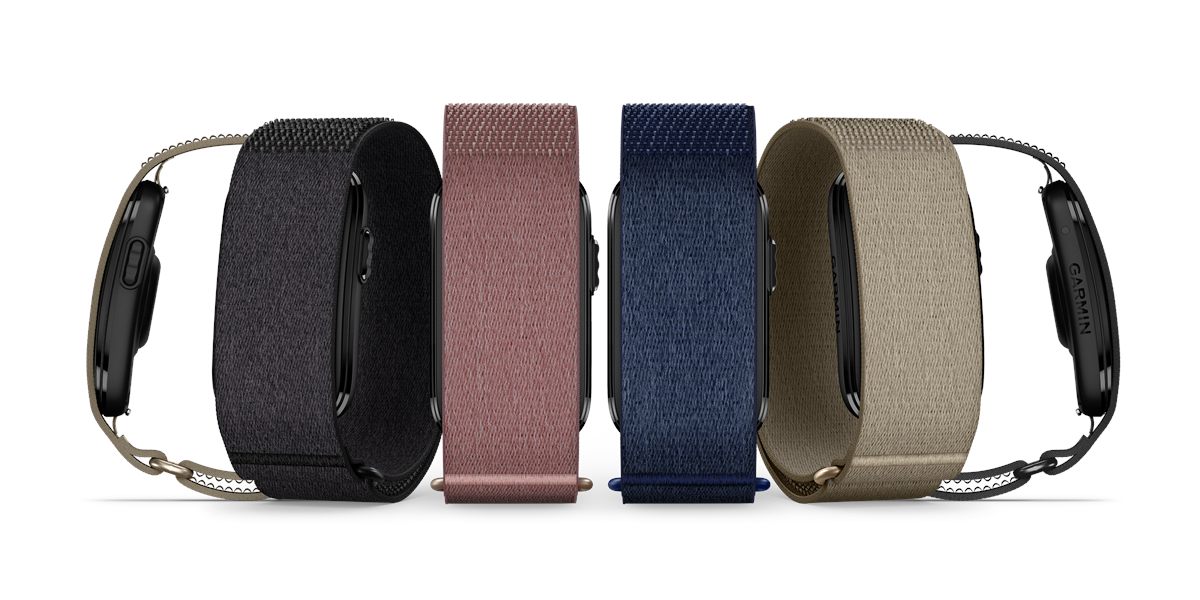
WHOOP alternatives compared
| Band | US price | Subscription | Battery (maker's claim) | Start a run on the band | Heart-rate broadcast | Upper-arm option |
|---|---|---|---|---|---|---|
| WHOOP One | $199 a year, band included | Required | 14+ days | No; app or auto-detection | Bluetooth, one device | Bicep Band, sold separately |
| Garmin Cirqa | $199.99 | None; Connect+ optional | Up to 10 days | Yes, one button | ANT+ and Bluetooth | $59.99 Upper Arm Band |
| Polar Loop | $199.99 | None | Up to 8 days | No; start in Polar Flow | None | $29.90 Sport Armband |
| Fitbit Air | $99.99 | None; Google Health Premium optional | Up to 7 days | No; start in the app | Bluetooth, to Google's tested partners; not Garmin | No official band |
| Amazfit Helio Strap | $99.99 | None; Zepp Aura optional | Up to 10 days | No; start in the Zepp app | Bluetooth only; Garmin unconfirmed | $19.99 Helio Armband |
None of them has a screen or built-in GPS, so every one needs your phone for pace, distance, and route. Each has its own morning score: Training Readiness on the Cirqa, Nightly Recharge on the Loop, Readiness on the Air, and Wake BioCharge on the Helio.
Garmin Cirqa: best for most runners
The Cirqa ($199.99) is the most complete running alternative. It is the only band here with a button to start and stop a run: set its favorite activity to Run in Garmin Connect, and with Phone GPS on and your phone with you, those runs get pace, distance, and route. Some auto-detected outdoor workouts can also switch on phone GPS by themselves. It brings Garmin's free training metrics, including Training Readiness, Training Status, HRV Status, Body Battery, and training load. It also broadcasts heart rate over ANT+ and Bluetooth to compatible Garmin devices such as Edge bike computers, to apps such as Zwift, and to gym equipment, though owners reported Bluetooth dropouts after an August firmware update (ANT+ kept working). If you already run with a Garmin watch, the band and watch share one Garmin Connect account.
The tradeoffs: Garmin lists no running plans for the band, its Garmin Coach strength and fitness plans and guided workouts need Connect+ ($69.99 a year), auto-detection can miss or start runs late, and there are no voice cues. Its wrist heart rate can lag at the start of fast intervals, which the $59.99 Upper Arm Band helps with. Read our Garmin Cirqa review and the head-to-head Garmin Cirqa vs WHOOP.
Polar Loop: best if you already use Polar
The Polar Loop ($199.99) gives you Polar's sleep and recovery tools with no subscription: Nightly Recharge, Sleep Plus Stages, SleepWise, and Daily Alertness, all in the free Polar Flow app. It suits runners who already train with Polar or want Polar's sleep analysis.
For running it is more limited. There are no buttons for daily use and no vibration, and Polar documents phone GPS only for sessions started in Polar Flow; during those runs, Flow shows live heart rate and pace on your phone and offers voice guidance at no cost. Reviewers have consistently found its automatic workout detection unreliable, and they describe Polar Flow as dated and cluttered. It can't broadcast heart rate, and Polar advises against wearing the Loop and a Polar watch at the same time. Our Garmin Cirqa vs Polar Loop comparison covers the differences in detail.
Fitbit Air: the lightest budget pick

The Fitbit Air ($99.99) weighs 12 grams with its band and tracks sleep, HRV, Readiness, and Cardio Load for a one-time price, with Google Health Premium as an optional $9.99-a-month add-on. It is the easiest band here to forget you are wearing, day and night.
Reviewers rate its automatic detection of steady runs and walks highly, but for structured training it has clear gaps. You can't start a run on the band, pace and route need a run started in the Google Health app on your phone, Google lists heart-rate sharing only for its tested partners and says Garmin devices aren't compatible, and there is no official upper-arm band for intervals. See our Fitbit Air review and Garmin Cirqa vs Fitbit Air.
Amazfit Helio Strap: the budget pick for workouts
The Amazfit Helio Strap ($99.99 at Amazfit's US store as of October 2026) is the cheapest band here with an official upper-arm option. Amazfit designs it for upper-arm wear during training with a $19.99 Helio Armband, $119.98 in all, and independent reviewers found its heart rate close to a chest strap, especially on the arm; on the wrist it can lag at the start of hard intervals. Everything is free in the Zepp app: BioCharge, Wake BioCharge, sleep score and stages, HRV, training load, training effect, VO2 max, and recovery time. Zepp Aura, at $69.99 a year, adds only sleep and relaxation extras.
Reviewers consistently found its automatic workout detection unreliable: it logs workouts that didn't happen and doesn't name the sport. In an August 2026 independent test of five screen-free bands, it often split interval runs in two when the tester slowed for about 90 seconds. It has no buttons, so you start and end runs in the Zepp app, and reviewers call the app less polished than WHOOP's. Its heart-rate broadcast is Bluetooth-only. In one independent test in July 2025, it worked with Peloton, Zwift, and a Wahoo bike computer, but a Garmin watch, a Garmin bike computer, and the Strava app paired without showing heart rate. No published re-test with Garmin gear has turned up since, so check compatibility before relying on it. Stock has also been patchy, with long stretches sold out on Amazfit's US store in 2026.
Using a band with a running watch
If you record runs on a GPS watch, the band covers sleep and recovery, and how well it fits alongside the watch depends on the watch's brand.
- Garmin watch: the Cirqa shares one Garmin Connect account with it. Record each run on one device, and set a Primary Wearable and a Primary Training Device in Garmin Connect so the right numbers win. None of the other three bands links directly to Garmin Connect.
- Polar watch: the Loop uses the same Polar Flow app, but Polar advises against wearing the two at the same time.
- Pixel Watch: Google Health supports one Pixel Watch and one Fitbit Air on the same account and combines their data.
- Any other watch: each band keeps its own app alongside the watch's, though an Amazfit watch shares the Zepp app with the Helio Strap.
What you give up by leaving WHOOP
- The coaching app. WHOOP turns its data into a daily Recovery score, a Strain target, and a sleep need, and reviewers consistently rate the app as its strongest feature.
- Battery and charging. WHOOP rates the 5.0 and MG for 14 or more days, longer than any band here, and Peak and Life add a battery pack you can charge from while wearing the band.
- Workout detection. An August 2026 independent comparison of these five bands ranked WHOOP's automatic workout detection first, the Fitbit Air a close second, then the Cirqa and the Helio Strap, with the Polar Loop last.
- Peak and Life extras, such as Healthspan on both, and an on-demand ECG and blood pressure estimates on Life.
- Runs from your watch. Since May 2026, WHOOP automatically imports the runs your Garmin or other watch posts to Strava, with GPS, distance, and pace, and says they count toward Strain.
WHOOP also has limits the alternatives share or beat: it can't use a chest strap for its own scores, it has no start button, and it costs money every year. If you do leave, time it to your renewal date: cancelling mid-term gets no prorated refund, access lasts to the end of the term, and under WHOOP's terms an unpaid account can't upload new data from the band. Our WHOOP review for runners covers the membership in full.
Cost over three years
| Option | Year one | Three years |
|---|---|---|
| WHOOP One | $199 | $597 |
| WHOOP Peak | $239 | $717 |
| WHOOP Life | $359 | $1,077 |
| Garmin Cirqa | $199.99 | $199.99 |
| Garmin Cirqa + Connect+ (annual) | $269.98 | $409.96 |
| Polar Loop | $199.99 | $199.99 |
| Fitbit Air | $99.99 | $99.99 |
| Fitbit Air + Premium (monthly, after the trial) | $189.90 | $429.66 |
| Amazfit Helio Strap | $99.99 | $99.99 |
These are US list prices as of October 2026, before tax, so verify them at checkout. The three-year figures assume prices do not change, and the Premium row assumes monthly billing after the Air's three-month trial. Arm bands are extra: $59.99 for the Cirqa, $29.90 for the Loop, and $19.99 for the Helio. WHOOP's memberships renew automatically, and WHOOP can change renewal prices.
Other screen-free bands
- Garmin Index Sleep Monitor ($169.99): an upper-arm band for sleep only, with HRV Status, a smart alarm, and Body Battery if your Primary Wearable is on Garmin's Body Battery TrueUp list, for Garmin watch owners who don't want to sleep in their watch. Garmin says it records no steps or workouts; our Cirqa vs Index Sleep Monitor comparison covers which watches it works with.
- Amazfit Helio Strap Pro ($199.99): adds a waist motion module and HYROX-focused movement analysis; for most runners, the $99.99 original covers the same ground.
How to choose
- You run with a Garmin watch you'd rather not sleep in, or want to start runs from the band: the Garmin Cirqa. If you already wear the watch day and night, the Cirqa adds little.
- You train in Polar Flow: the Polar Loop.
- You mainly want sleep and recovery data in the lightest band: the Fitbit Air.
- You want accurate workout heart rate on a budget and don't mind starting runs in an app: the Amazfit Helio Strap with its $19.99 armband, $119.98 in all.
- You will use daily coaching and a Strain target: stay with WHOOP.
Bottom line
For most runners, the Garmin Cirqa is the best WHOOP alternative: it costs about the same as one year of WHOOP One with no fee after that, it is the only band here that starts a run at the press of a button, and it adds Garmin's training metrics and heart-rate broadcast over ANT+ as well as Bluetooth. The Polar Loop suits Polar users, the Fitbit Air is the lightest budget choice, and the Helio Strap is a $99.99 workout band with rough edges. If you need pace on your wrist, none of these replaces a running watch; see our guide to the best running watches.
FAQ
What is the best WHOOP alternative without a subscription?
For runners, the Garmin Cirqa ($199.99): it needs no subscription, starts runs with a button, includes Garmin's Training Readiness and Training Status, and broadcasts heart rate to other devices.
What is the cheapest WHOOP alternative?
The Fitbit Air and Amazfit Helio Strap both cost $99.99 at US list prices as of October 2026, with no required subscription. The Air is lighter; the Helio can be worn on the upper arm with a $19.99 armband.
Is the Garmin Cirqa better than WHOOP?
For running with Garmin gear, it is the better match and costs about $400 less than WHOOP One over three years. WHOOP still has the better coaching app and longer battery, and its workout auto-detection ranked ahead of the Cirqa's in an August 2026 independent test.
Do these WHOOP alternatives have GPS?
No. None of these bands has built-in GPS, so each uses your phone's GPS for pace, distance, and route on runs you start in its app or, on the Cirqa, with its button. The Cirqa can also switch on phone GPS for some auto-detected outdoor workouts.
Is the Amazfit Helio Strap a good WHOOP alternative?
For workout heart rate on a budget, yes, especially on its $19.99 armband. Reviewers found its automatic workout detection unreliable and its app less polished than WHOOP's, and in one 2025 test a Garmin watch paired with it but showed no heart rate.
Can I use these bands with a running watch?
Yes. Record each run on one device and let the band cover sleep and recovery. With a Garmin watch, the Cirqa shares one Garmin Connect account. The Fitbit Air can share one Google Health account with a Pixel Watch, and the Loop uses Polar Flow like Polar's watches, though Polar advises against wearing the two at the same time. The Helio Strap shares the Zepp app with Amazfit's watches. With other watches, each band keeps its own app.