 By Raji Shah · Updated 2026-10-19
WHOOP sells a membership, not a gadget. The band has no screen and no GPS; what you pay for every year is an app that turns your sleep and heart-rate variability into a daily Recovery score, scores your training as Strain, and sets a plan for the day. For runners, that makes WHOOP a recovery layer next to a GPS watch, not a replacement for one.
Quick verdict: buy WHOOP if you will act on a daily Recovery score and are comfortable paying $199 to $359 a year. Skip it if you want to pay once, need live pace, or want dependable wrist heart rate in intervals.
What WHOOP is—and is not
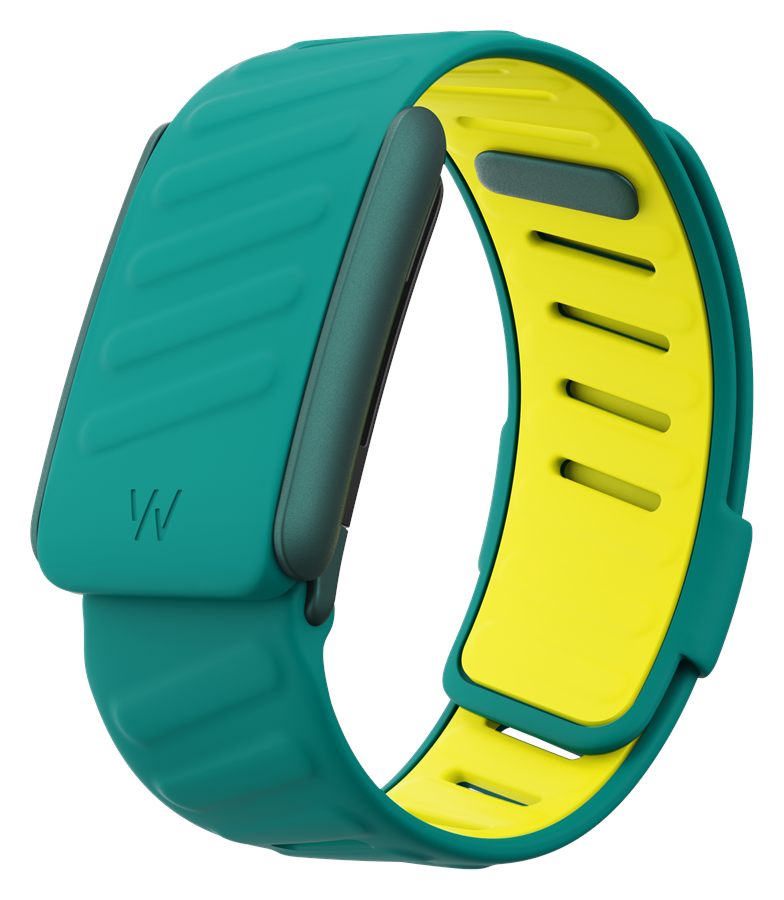
WHOOP's current models, as of October 2026, are the WHOOP 5.0 and WHOOP MG, launched in May 2025. Both are screen-free sensor pods worn in a strap. The MG, which ships with the Life tier, adds ECG electrodes in its clasp.
| Spec | WHOOP 5.0 and MG | Why it matters for runners |
|---|---|---|
| Price | One $199, Peak $239, or Life $359 a year in the US as of October 2026, band included | There is no one-time purchase option. |
| Display and controls | None | Runs start in the phone app or by auto-detection; there is no Apple Watch app. |
| GPS | None built in; uses your phone's GPS | Carry your phone, or import runs from your watch. |
| Battery | 14+ days (WHOOP's rating) | Peak and Life can charge it on your wrist without a cable. |
| Size and weight | 34.7 x 24 x 10.6 mm; about 26.5 g (5.0) or 27.3 g (MG), per WHOOP | Small enough to sleep in. |
| Water rating | IP68, water-resistant to 10 m | Fine for showers and swimming; not for diving. |
| Sensors | Optical heart rate, accelerometer, skin temperature, blood oxygen; ECG on the MG | WHOOP can't pair a chest strap for its own scores. |
| Heart-rate broadcast | Bluetooth only, to one device at a time | ANT+-only gear can't read it. |
| Wear options | Wrist bands, the Bicep Band, or WHOOP Body apparel | The upper arm suits hard workouts. |
WHOOP One, Peak, and Life: prices and what each tier adds
Every tier includes the band. Peak and Life add health and longevity features, not better run tracking, so most runners need only One.
| Tier | US price (October 2026) | Hardware, per WHOOP's US membership page | What it adds |
|---|---|---|---|
| One | $199 a year | WHOOP 5.0, wired Basic Charger, CoreKnit band | Recovery, Strain, sleep coaching, VO2 max, heart-rate zones, Strength Trainer, Women's Hormonal Insights, AI coaching, Strava sync |
| Peak | $239 a year | WHOOP 5.0, Wireless PowerPack, SuperKnit band | Health Monitor, Stress Monitor, and Healthspan (WHOOP Age and Pace of Aging) |
| Life | $359 a year | WHOOP MG, Wireless PowerPack, SuperKnit Luxe band | On-demand ECG, Blood Pressure Insights (beta), and priority phone support |
Confirm the price and the hardware for your tier at checkout; WHOOP's own pages have disagreed on what ships with One. Memberships renew automatically, WHOOP's terms let it change the renewal price with at least 15 days' notice, and cancelling mid-term gets no prorated refund. At October 2026 prices, three years costs $597 on One, $717 on Peak, and $1,077 on Life.
For US Life buyers: irregular-rhythm notifications aren't available in the US, and Blood Pressure Insights is a cuff-calibrated wellness estimate, not an FDA-cleared measurement like the ECG.
What WHOOP gets right
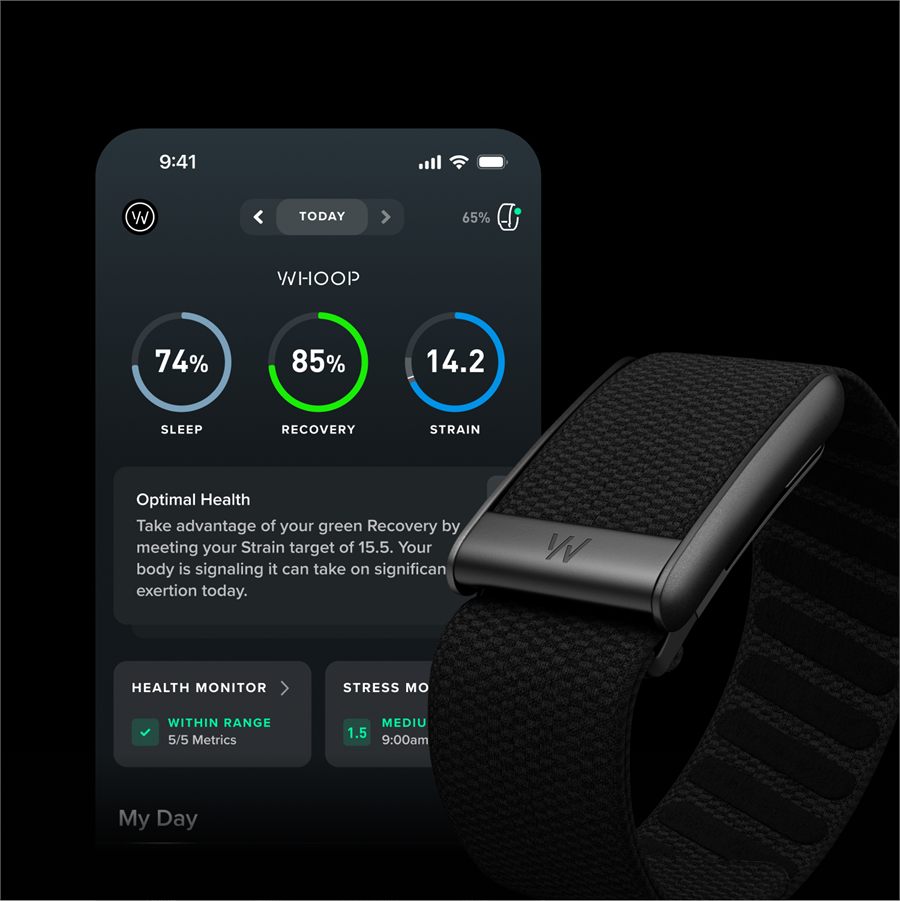
The app explains your data. Each morning, Recovery turns your overnight heart-rate variability, resting heart rate, respiratory rate, sleep, skin temperature, and blood oxygen into a 0-100% score, colored green, yellow, or red. The app then sets a Strain target for the day and tells you how much sleep you need. Independent reviewers consistently rate the app as its strongest feature.
It catches deliberate workouts. An August 2026 independent comparison of five screen-free bands ranked WHOOP's automatic detection first, and you can adjust a detected workout's start and end times afterward. Short, easy sessions are the exception, so start short runs in the app.
Strava now works both ways. Since May 2026, WHOOP automatically imports the runs your Garmin or other watch posts to Strava, with GPS, distance, and pace when available, and says they count toward Strain. When an import overlaps a workout WHOOP recorded, WHOOP keeps the version with richer data.
It is easy to live with. Most reviewers found the band discreet and comfortable for round-the-clock wear, and about two weeks between charges means it rarely comes off.
Where it frustrates runners
Nothing on your wrist. With no screen, there is no pace, no splits, no interval prompts, and no audio pace or heart-rate cues during a run; route, pace, and distance come from your phone.
Strain is a daily score. It rates effort from 0 to 21 for each workout and each day; it is not a multi-week training-load model like a Garmin watch's Training Status. It also depends on WHOOP knowing your real max heart rate.
Your chest strap only helps your watch. As of WHOOP's latest public statements, it can't use a chest strap or other external heart-rate sensor for its own scores.
You pay every year you use it. WHOOP is sold only as a membership, and its lifetime warranty covers devices bought directly from WHOOP only while you are a member. Under WHOOP's terms, an unpaid account goes inactive after three days and can't upload new data from the band.
Accuracy: wrist, bicep, and sleep
WHOOP's sensor has the limits of most optical sensors on a wrist: it is best at steady efforts and weakest when heart rate changes fast, as our optical heart-rate guide explains.
| Situation | What to expect | Better approach |
|---|---|---|
| Sleep and wake times | Within a couple of minutes in an independent multi-band test. | Wear it on the wrist overnight, as WHOOP recommends. |
| Sleep stages | An estimate; one 30-night comparison against other trackers suggests deep sleep may be overstated. | Watch weekly trends, not one night's stages. |
| Overnight HRV | Trends track other wearables in published comparisons; the values differ between brands. | Compare against your own baseline. |
| Easy and steady runs | Tracked a chest strap well on an easy run in one independent test. | The wrist is fine. |
| Intervals and fast efforts | Less reliable on the wrist, with warm-up and mid-interval errors in the most thorough tests. | Use the Bicep Band, or pair a chest strap with your watch. |
| Upper arm (Bicep Band) | Close to reference devices across 19 workouts in one independent test. | Use it for intervals and other hard sessions. |
WHOOP updated its heart-rate algorithm during 2026, but testing published in August 2026 still found wrist errors in intervals. WHOOP recommends the wrist for sleep and says bicep wear may limit some features, so the practical split is wrist overnight and arm for hard workouts.
VO2 max is on every tier. WHOOP estimates it passively, or with a GPS-assisted model for outdoor runs recorded in the WHOOP app with Track Route on; it doesn't say whether Strava imports count. In WHOOP's own testing of 248 people, the average error was 3.7 mL/kg/min for the passive estimate and 3.3 with GPS; those are WHOOP's figures, not independent results.
Sleep and Peak's extra metrics
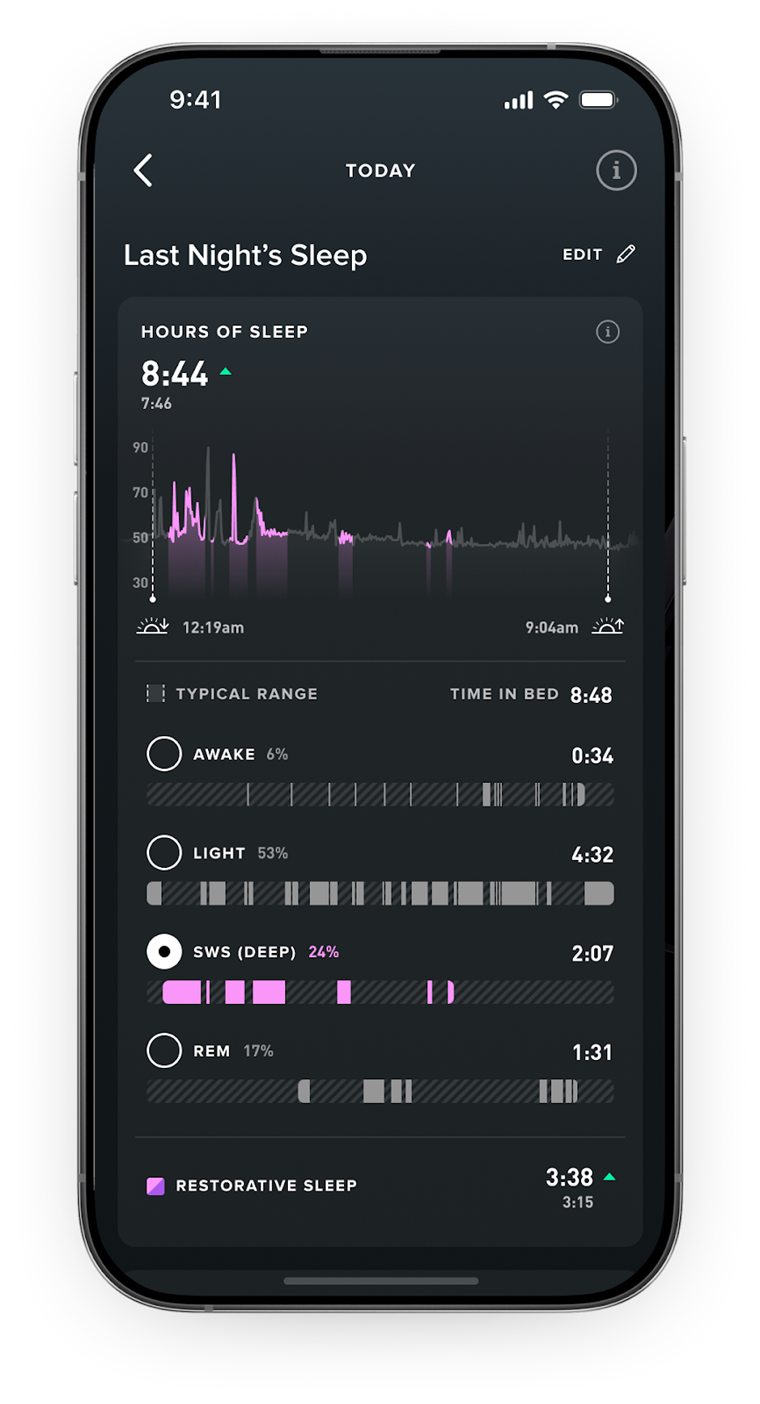
Sleep shows time in light, deep, and REM sleep, how much sleep WHOOP thinks you need, and a sleep performance score, with an optional vibrating alarm. Your daily HRV, one of Recovery's inputs, is measured during sleep and means most against your own baseline; more in our HRV guide for runners.
Peak extras: Stress Monitor gives a live 0-3 stress score from heart rate and HRV against your 14-day baseline. Healthspan estimates a WHOOP Age and Pace of Aging from nine metrics, including VO2 max, time in heart-rate zones, steps, and sleep consistency. Treat it as WHOOP's model, not a medical measure. Our recovery metrics guide explains how to read these scores.
Running with WHOOP: a setup that works
Set WHOOP up like this:
- Keep your watch. Record runs on your GPS watch, connect Strava in the WHOOP app, and let the sync bring in route, distance, and pace. Wear the band on the run too; WHOOP's scores come from its own sensor.
- Or use your phone. Start the run in the WHOOP app with Track Route on and location access set to Always.
- Set your max heart rate. If you know a tested max, enter it in the app's heart-rate settings; Strain depends on it.
- Broadcast if you want WHOOP's heart rate on a watch. Turn on Heart Rate Broadcast in the app's device settings. It pairs over Bluetooth with one device at a time, uses extra battery, and can switch off after an update.
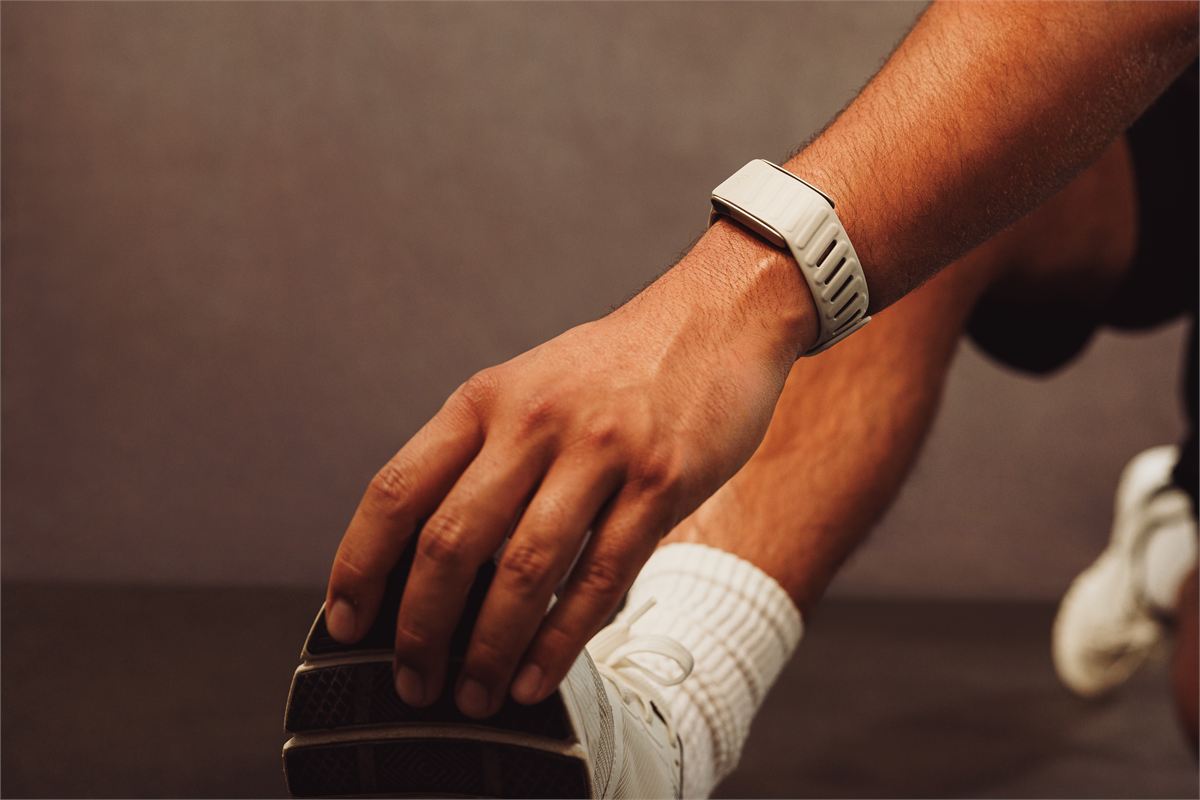
- Choose the band for the session. Use the Bicep Band for intervals and the SportFlex silicone band, which WHOOP recommends for sweaty runs, the rest of the time. Both are sold separately.
WHOOP for marathon training
WHOOP can guide how hard to train each day and how much to sleep through a marathon build, but it doesn't guide the runs themselves. The daily Strain Target recommends a range of Strain for the day, based on that morning's Recovery; WHOOP's January 2026 explainer says you can switch it to a restorative goal, for example during a taper, or to functional overreaching to push for fitness gains. Sleep Need rises with the day's Strain, and the Sleep Planner and Wake Alarm help you meet it. Weekly Plans, which unlock after seven recoveries, set weekly goals for areas such as sleep, recovery, or fitness rather than a race-specific training plan.
In May 2025, a WHOOP Team member on WHOOP's forum, who said they had used the band for their own marathon training, told a first-time marathoner that HRV, and with it Recovery, may dip for a few days in taper week and that this is expected. Our guide to why running can feel worse during a taper advises reading recovery scores that week as context, not a verdict.
What it doesn't do: show pace or splits on your wrist, guide structured intervals, or model your training load across weeks. WHOOP also doesn't list a race-time predictor, and its developer API doesn't let training-plan apps push workouts into it. At least seven owners on WHOOP's forum asked for splits, pace targets, or structured runs between February and October 2026, with no staff reply. An earlier request for split times did get a reply: in January 2026, a WHOOP staff member called it sensible and said they would pass it to the product team. So pair WHOOP with a GPS watch for the sessions and let the runs import through Strava, as in the setup above.
Battery isn't a race-day concern for the band, which WHOOP rates for 14+ days, but if you track the race on your phone with Track Route instead of a watch, the phone's battery is the limit. Expect a marathon to land near the top of the 0 to 21 Strain scale: WHOOP's Strain explainer says one marathon might take Day Strain to 20.4, and in a 2019 Boston Marathon story on WHOOP's blog, the runner logged 20.7 and woke to a Recovery of 37%. Afterward, WHOOP's 2021 post-marathon guide suggests a few days to a week with no running and says most coaches allow up to four weeks before intense training. It adds that recovery varies from person to person and that resting heart rate and HRV can help you track it. Treat those readings as one signal alongside how you move and feel, and add hard sessions only once easy running feels normal and repeatable, as our post-marathon recovery guide explains.
Battery, charging, and bands
WHOOP rates the 5.0 and MG for 14+ days, independent reviews mostly got close to two weeks (one outlier was nearer nine days), and WHOOP says a full charge takes about two hours. One ships with a wired charger, so charging means taking the band off or staying tethered to the cord. Peak and Life add the Wireless PowerPack, which holds one full charge and clips onto the band while you wear it; WHOOP says not to charge while the pack is wet, so remove it before swimming.
WHOOP says the LeatherLuxe band isn't sweat-resistant, so skip it for running. If you are upgrading from a 4.0, budget for new bands; 4.0 bands don't fit the 5.0 or MG.
WHOOP vs the alternatives
| Option | Upfront cost | Ongoing cost | Best for |
|---|---|---|---|
| WHOOP One | $199 for the first year, band included | $199 a year | Coached recovery data alongside a GPS watch |
| WHOOP Peak or Life | $239 or $359 for the first year | $239 or $359 a year | Cable-free charging, Healthspan, ECG, or blood pressure estimates |
| Garmin Cirqa | $199.99 | None required; Connect+ optional | Garmin users who want watch-free 24/7 data |
| Fitbit Air | $99.99 | None required; Google Health Premium optional | Budget buyers who want a lighter band |
| Polar Loop | $199.99 | None required | Polar users who want a subscription-free band |
| GPS running watch | Varies by model | Usually none | Live pace, standalone GPS, and race day |
Prices are US list prices as of October 2026; verify them at checkout. An August 2026 independent test found WHOOP's wrist heart rate roughly as accurate as the Cirqa's and Fitbit Air's. Read Garmin Cirqa vs WHOOP for the full three-year math, our WHOOP alternatives roundup for four screen-free bands that need no membership, or WHOOP vs Garmin and WHOOP vs Oura to weigh a watch or a ring.
Who should buy WHOOP
- Runners who already own a GPS watch: coached sleep and recovery data on top of your watch.
- Athletes who mix running with lifting or other sports: one effort score across all of it.
- People who respond to coaching: you will change your bedtime or your session based on a morning score.
- Anyone tired of charging: about two weeks per charge, plus cable-free charging on Peak and Life.
Who should skip it
- You want to pay once. The Garmin Cirqa, Fitbit Air, and Polar Loop need no subscription.
- You want one device for training. A GPS running watch gives you a screen, live pace, and standalone GPS.
- You won't wear an arm band for hard sessions. On the wrist, WHOOP's heart rate, and the Strain built on it, is least reliable in intervals.
- Your gear is ANT+ only. WHOOP broadcasts heart rate over Bluetooth only.
What to verify before joining
- Tier and hardware: confirm both at checkout.
- Free trial: one month of Peak that converts to $239 a year unless you cancel or switch tiers first; a cancelled trial's device and charger must go back within 14 days of receiving the return label, or WHOOP charges a $110 restocking fee. The trial device may be pre-owned. See our WHOOP free trial guide.
- Returns: a paid membership bought from WHOOP can be returned within 30 days of receipt, minus shipping; free trials are excluded.
- HSA/FSA: WHOOP says US memberships are eligible; check with your plan.
Verdict
WHOOP is a recovery coach first and a tracker second: about two weeks per charge, and clear about what your sleep and heart-rate variability mean for today's run. It is not a running watch, its wrist heart rate is least reliable in intervals and other fast efforts, and it costs $199 to $359 a year. Buy it alongside a GPS watch if the coaching will change your habits; if you mostly want the data, a one-time band such as the Garmin Cirqa costs less over time.
If WHOOP fits how you train, you can join through the Zone Five Labs WHOOP referral link and confirm the current offer and membership terms at checkout. Our WHOOP referral guide explains how it works.
Disclosure: This is a referral link. Zone Five Labs may receive a referral credit if you join through it. Referral terms can change, so verify the current offer at checkout before subscribing.
FAQ
Does WHOOP have GPS?
No. Start a run in the WHOOP app with Track Route on and carry your phone to record route, pace, and distance, or record on your GPS watch and let WHOOP import the run through Strava.
How much does WHOOP cost?
In the US as of October 2026, One costs $199 a year, Peak $239, and Life $359, band included. Memberships renew automatically, so One costs $597 over three years at October 2026 prices.
Which WHOOP tier should a runner choose?
One, for most runners: it includes Recovery, Strain, sleep coaching, VO2 max, heart-rate zones, and Strava sync. Peak adds cable-free charging, Stress Monitor, and Healthspan; Life adds an on-demand ECG and blood pressure estimates.
Is WHOOP accurate for running heart rate?
It tracks steady runs well on the wrist but is less reliable in intervals and fast efforts. On the upper arm with the Bicep Band, it came close to reference devices across 19 workouts in one independent test.
Is WHOOP good for marathon training?
For the recovery side, yes: its Recovery score and Strain Target help you decide how hard to go each day, its Sleep Need tells you how much to sleep, and WHOOP says you can switch the Strain Target to a restorative goal for a taper. Train with a GPS watch, since WHOOP shows no pace or splits on your wrist and has no structured run workouts; wear the band on those runs too, and let WHOOP import them through Strava.
Does WHOOP work with a Garmin watch?
Yes. WHOOP can broadcast heart rate to a Garmin watch over Bluetooth and imports the runs your Garmin posts to Strava. There is no direct Garmin Connect link.
How long does the WHOOP battery last?
WHOOP rates it for 14+ days, and independent reviews mostly got close to two weeks. Peak and Life include a battery pack that charges the band while you wear it.