 By Raji Shah · Published 2026-10-15
Garmin and Google now both sell a band with no screen that tracks sleep and recovery without a required subscription. The Fitbit Air costs half as much and is noticeably lighter. The Cirqa adds a start button, deeper training metrics, and heart-rate broadcasting that works with Garmin gear. For most runners, the choice comes down to which ecosystem already records their runs.
Quick answer: choose the Garmin Cirqa ($199.99) if you train with a Garmin watch or bike computer, want to start runs with a button, or want an official upper-arm band for hard sessions. Choose the Fitbit Air ($99.99) if you want the cheapest, lightest way into serious recovery tracking and do not need Garmin compatibility. US list prices as of October 2026; neither band has a screen or built-in GPS.
| Category | Garmin Cirqa | Fitbit Air |
|---|---|---|
| US price | $199.99 | $99.99 ($129.99 special editions) |
| Optional subscription | Garmin Connect+, $6.99 a month or $69.99 a year | Google Health Premium, $9.99 a month after a three-month trial |
| Weight | 20.7-21.2 g with strap | 12 g with band |
| Battery (maker's claim) | Up to 10 days | Up to 7 days; five minutes of charging adds about a day |
| Controls | One button starts and stops your favorite activity | No button; a double-tap wakes the status light |
| GPS | Phone GPS for button- or app-started workouts and some auto-detected ones | Phone GPS only for runs started in the app |
| Heart-rate sharing | ANT+ and Bluetooth, including Garmin devices | Bluetooth to Google's tested partners; not Garmin |
| Upper-arm wear | Official $59.99 Upper Arm Band | No official arm band |
| Free recovery metrics | Training Readiness, Body Battery, HRV Status, sleep score | Readiness, Cardio Load, HRV, sleep score |
| Water rating | 5 ATM | 5 ATM (Google says it is not waterproof) |
Price and subscriptions
The Fitbit Air wins up front: $99.99 against the Cirqa's $199.99. Both bands give away their core recovery and training metrics, so you can stop there with either one.
The subscriptions change the long-run math if you want them. Garmin Connect+ costs $69.99 a year and mainly adds guided workouts, live heart-rate graphs, manual laps, and AI insights. Google Health Premium costs $9.99 a month after the Air's three-month trial and adds Google's AI coach, adaptive weekly plans, and extra insights.
| Option | Year one | Three years |
|---|---|---|
| Garmin Cirqa | $199.99 | $199.99 |
| Garmin Cirqa + Connect+ (annual) | $269.98 | $409.96 |
| Fitbit Air | $99.99 | $99.99 |
| Fitbit Air + Premium (monthly, after the trial) | $189.90 | $429.66 |
US list prices as of October 2026, assuming they do not change; verify them at checkout. The Premium trial needs a payment method and renews automatically, so set a reminder if you only want the free tier.
Recovery and sleep
Both bands build a morning recovery picture from overnight heart-rate variability, resting heart rate, and sleep. Garmin spreads it across Training Readiness, Body Battery, HRV Status, and sleep score, which gives more detail and more to learn. Google rolls it into a single 0-100 Readiness score and pairs it with a weekly Cardio Load target.
Neither band's sleep stages should be treated as lab-grade, and each brand's HRV numbers only make sense against its own baseline. Our recovery metrics guide explains how to read them without overreacting to one bad night.
Recording runs
This is where the two differ most for runners. The Cirqa has a physical button: set your favorite activity to Run in Garmin Connect, then press once to start and again to stop. Some auto-detected outdoor workouts can also switch on your phone's GPS by themselves.
The Fitbit Air has no button, so a run with pace, distance, and route has to start in the Google Health app with Connected GPS on. Auto-detected runs are still logged, but without a route, and their distance is estimated from steps. The Air's VO2 max estimate also comes only from outdoor GPS runs.
Neither band shows live numbers on your wrist. If you want pace and lap splits while you run, record runs on a GPS running watch and let the band handle the rest of the day.
Heart-rate accuracy and auto-detection
In published testing, both bands track average heart rate closely on steady runs, and both can lag or misread fast intervals and surges on the wrist. The Cirqa has an answer: its optional Upper Arm Band ($59.99), which testers found cleans up hard efforts. Google sells no upper-arm band for the Air.
Automatic detection leans the other way. The Air's detection of steady runs and walks has drawn stronger reviews, while the Cirqa keeps its heart-rate sensor in a low-power mode until it recognizes a workout, so a late start costs you workout heart-rate data. Starting runs manually avoids that gap on the Cirqa. Google says an upgraded Fitbit model covering more than 100 activities rolls out later in October.
Battery, comfort, and bands
Garmin rates the Cirqa for up to 10 days and Google rates the Air for up to 7; in published testing, both commonly land around a week. The Air charges quickly, with Google saying five minutes adds about a day. Both bands come off the wrist to charge.
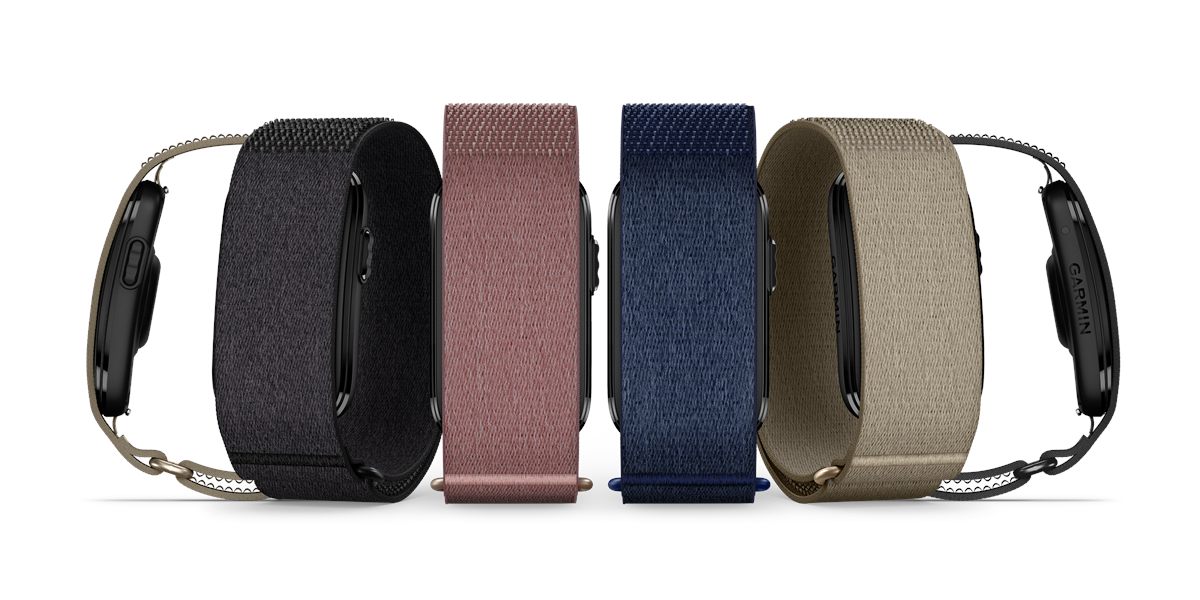
The Air is the easier band to live with physically. At about 12 grams it is much lighter than the Cirqa's roughly 21 grams, and its pod moves between bands with one push. The Cirqa's pod is longer, can overhang a small wrist, and its strap swaps use small spring-bar pins.
Apps and ecosystem
The Cirqa lives in Garmin Connect, which merges its data with any Garmin watch or Edge you own and can broadcast heart rate over ANT+ or Bluetooth to bike computers and compatible gym equipment. The Fitbit Air lives in the Google Health app, works with iPhone and Android, and pairs with one Pixel Watch on the same account. It can share heart rate with Google's tested partners, such as Zwift, Peloton, and the Strava app, but Google lists Garmin as not compatible.
Choose the Garmin Cirqa if...
- You already train with a Garmin watch or Edge and want one app.
- You want to start runs with a physical button.
- You want Training Status, training load, and Body Battery without a subscription.
- You want an official upper-arm band for intervals and lifting.
- You want to broadcast heart rate to Garmin devices or over ANT+.
Choose the Fitbit Air if...
- You want the cheapest serious recovery tracker at $99.99.
- You want the lightest, least noticeable band to sleep in.
- You use a Pixel Watch, or no watch at all.
- You want automatic detection to catch steady runs and walks.
- You are curious about an AI coach and want to try it free for three months.
Verdict
If Garmin already records your runs, the Cirqa is the better buy: it slots into the same account, adds a start button and an upper-arm option, and broadcasts heart rate to your other Garmin gear. If you are starting from scratch or live outside Garmin, the Fitbit Air does the core recovery job for half the price in a lighter band. Neither replaces a GPS watch, so decide what records your runs first, then pick the band that fits around it. For deeper dives, read the full Garmin Cirqa review and Fitbit Air review.
FAQ
Is the Fitbit Air cheaper than the Garmin Cirqa?
Up front, yes: $99.99 versus $199.99 at US list prices as of October 2026. Both work without a subscription. If you add the optional subscriptions, the Air's Google Health Premium at $9.99 a month after its trial costs more over time than Garmin Connect+ at $69.99 a year.
Do the Garmin Cirqa or Fitbit Air have GPS?
Neither has built-in GPS. Both use your phone's GPS for pace, distance, and route. The Air needs the run started in the Google Health app with Connected GPS on, while the Cirqa can also switch on phone GPS for some auto-detected outdoor workouts.
Which is better if I already own a Garmin watch?
The Cirqa. Its data merges with your watch in Garmin Connect and it can broadcast heart rate to Garmin devices. The Fitbit Air has no direct Garmin link and Google lists Garmin as not compatible with its heart-rate sharing.
Which is more accurate for running heart rate?
On steady runs both track closely in published testing, and both can struggle with fast intervals on the wrist. The Cirqa has an official upper-arm band that helps hard efforts; Google sells no upper-arm band for the Air.
Do I need a subscription for either band?
No. Readiness, sleep, HRV, and training-load metrics are free on both. Garmin Connect+ adds guided workouts, live graphs, and AI insights, and Google Health Premium adds Google's AI coach and adaptive plans.